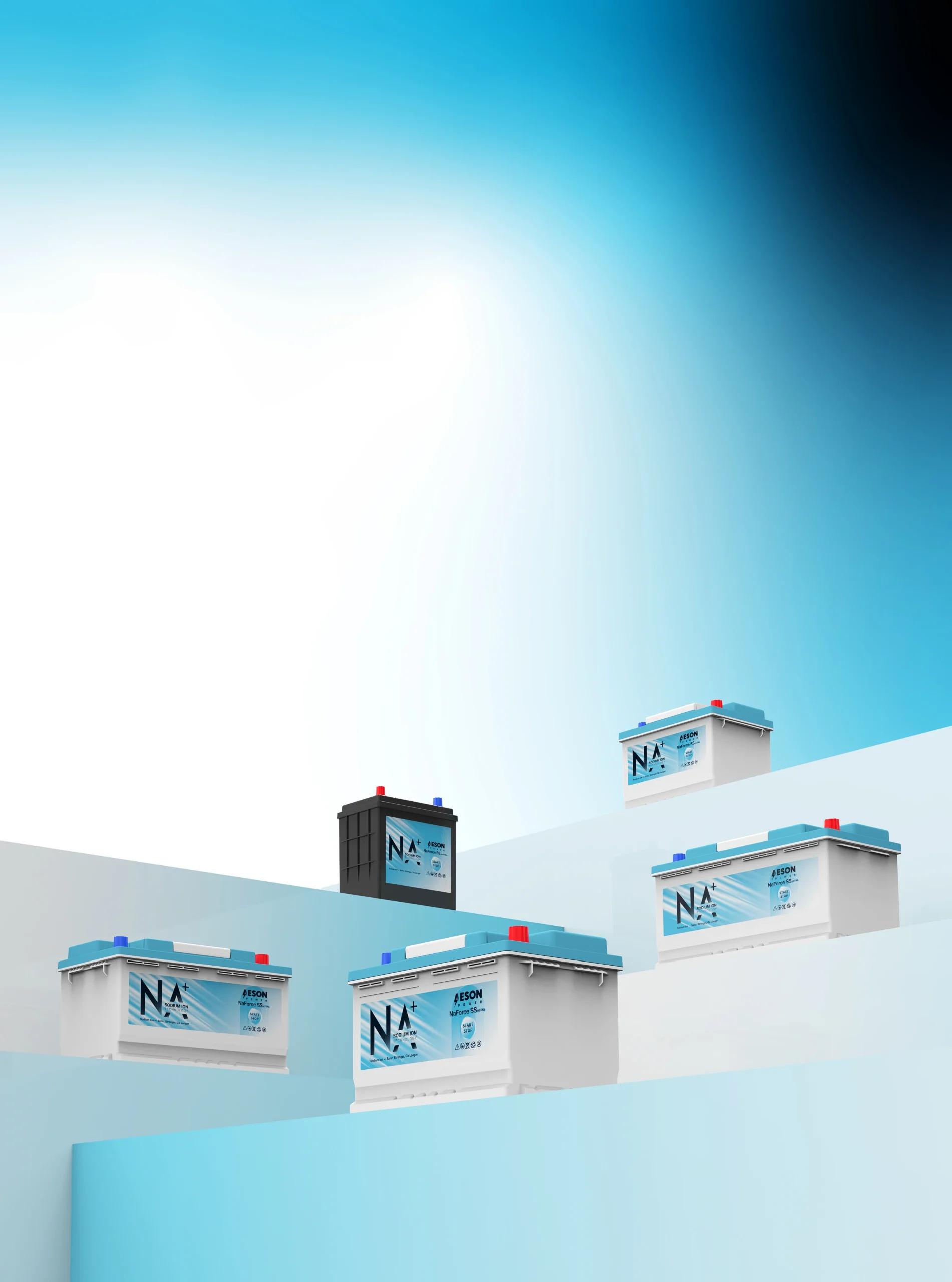
From Product Listing to Project Brief: Sodium Ion Battery Technology: Before a Supplier Shortlist
For fleet and equipment planners, sodium ion battery technology should enter a procurement discussion as a set of requirements, not as a conclusion. A product listing may describe chemistry, applications, or broad advantages, but a project brief must state what the battery is expected to do, where it will operate, and which evidence is relevant to that use. The handoff from browsing to sourcing is therefore a screening exercise: define the duty first, then compare only information that answers the defined requirement.

Set criteria before comparing candidates
Start by describing the operating task in plain language. A fleet planner might need starting power, repeated high-current cycling, dependable operation in cold conditions, or compatibility with a particular vehicle architecture. An equipment buyer may instead be considering backup response, generator starting, marine use, or a low-speed electric vehicle. These are different decision contexts, even when they appear on the same technology page.
Convert that context into a short requirement table before reviewing suppliers. Useful headings include:
- Application: the vehicle, machine, or stationary system in which the battery will be used.
- Duty: starting, backup, cycling, auxiliary service, or another defined task.
- Operating conditions: the temperatures, loading pattern, available space, and installation environment that matter to the project.
- Interfaces: physical fit, electrical characteristics, controls, charging arrangements, and responsibilities at installation.
- Evidence status: confirmed statement, useful indication, open requirement, or question for the supplier.
This table is a planning tool rather than a claim about any particular product. Its purpose is to prevent a broad category description from being treated as proof of fit. It also gives procurement colleagues a stable brief to use when requesting comparable information.
Review evidence by requirement
Read each supplier statement against a specific row in the table. For example, the cited technology page lists vehicle starter batteries with a polyanion compound positive electrode and hard carbon negative electrode. It also associates that application with high power density, cold starts, long cycle life, and frequent high-current cycling. Those statements can inform questions about a starting-battery requirement, but they should not automatically be transferred to every battery category, model, or installation.
The same page presents sodium-ion applications including UPS, diesel generator sets, energy storage, marine use, and low-speed electric vehicles. For a procurement handoff, that list is useful as an application-scope signal. It does not, by itself, specify the dimensions, electrical limits, control interfaces, service conditions, or system design for a particular project. Record the application named in the evidence, then keep project-specific requirements separate until they are addressed within the relevant scope.
A technical term also needs a controlled interpretation. The page describes NFPP, written as Na₄Fe₃(PO₄)₂(P₂O₇), as a hybrid polyanionic cathode material. It states that the framework facilitates rapid sodium-ion migration and suppresses volume expansion during cycling, and describes the material as well suited to high-performance, long-life energy storage applications. In a brief, this can be recorded as a technology description. It should not be rewritten as a guaranteed result for an unspecified battery or operating profile.
Keep trade-offs visible
In the middle of a technical review, sodium ion battery technology is best handled through explicit trade-offs rather than a single ranking. The official Technology Path page states that its polyanion technology uses strongly covalently bonded anionic groups to support a robust and highly stable cathode framework, with stated benefits including cycle life, thermal safety, and structural integrity. This is a real-world anchor for the review because it ties the discussion to a named technology description and a stated product/application scope. It does not establish performance or suitability for other products or applications.
That boundary makes the evidence more useful, not less. A planner can place the statement beside the requirement it may inform, such as a question about durability or thermal considerations, while leaving the project decision open. The review record could distinguish between “stated on the technology page”, “relevant to the named application”, and “still to be resolved for this project”. Such labels help prevent marketing language from becoming an accidental specification.
Trade-offs should also be written as questions. If high-rate discharge or fast charging is presented as a technology advantage, ask which operating condition, product scope, and test basis the statement covers. If low-temperature performance is highlighted, define the temperature range and duty that matter to the fleet. If low cost or abundant resources is mentioned, separate a general technology proposition from the delivered cost, lifecycle cost, and commercial terms of the proposed supply. These are decision prompts, not claims that a project will achieve a particular outcome.
Create a repeatable decision record
Before a supplier shortlist is approved, create one page that another reviewer can follow. Begin with the project use case and the non-negotiable requirements. Add the evidence statement beside each relevant requirement, preserving its scope. Then list the assumptions made by the project team, the questions that require a supplier response, and the information that would change the shortlist.
A simple status system can keep the handoff disciplined:
- In scope: the evidence clearly concerns the application or technology being reviewed.
- Related: the evidence is informative but comes from a different application or a broader category.
- Open: the requirement is important, but the available statement does not settle it.
- Not comparable: the wording, scope, or unit of comparison differs between candidates.
Use the same headings for every candidate. Do not allow one supplier to be compared by chemistry while another is compared by a product-level result. Keep installation responsibilities, operating assumptions, and unresolved interfaces visible in the record. The shortlist should then reflect the quality and relevance of the evidence, not merely the number of attractive claims in a listing.
The practical outcome is a cleaner procurement handoff. Fleet and equipment planners can explain why a candidate was included, which stated application informed the review, and which requirements remain open without overstating what the source proves. AesonPower can be recorded as the source of the cited technology and application statements, while the final project brief retains its own requirements, scope limits, and unresolved questions.