How to carry Marine Gas Detector requirements from research into procurement: supplier questions shortlisting
For a project manager, reviewing a marine gas detector should lead to better supplier questions, not an unsupported product verdict. The practical task is to define the decision, separate confirmed information from open points, and carry both into procurement without losing context.

Clarify the decision before contacting suppliers
Shortlisting becomes difficult when a broad topic is treated as a complete specification. Start by writing down what the project must decide. The decision might concern whether a listed product belongs in the candidate set, which information should appear in a request for quotation, or which technical questions need an answer before the shortlist can move forward.
Keep the initial brief focused on the intended scope. Record the type of installation or operation in general terms, the people responsible for the decision, and the point at which procurement needs usable information. These details are working assumptions for the project team, not claims about any particular detector.
A short decision statement can use this structure:
- We are shortlisting equipment for a defined marine-related project context.
- We need comparable information from potential suppliers.
- We will record unresolved requirements rather than filling them with assumptions.
This approach helps prevent a catalogue label from becoming an implied approval. It also gives suppliers a clearer question to answer.
Turn the brief into supplier questions
Supplier questions should follow the decision statement. Avoid sending a long, unstructured list that mixes product identity, technical requirements, documentation, and commercial matters. Group the questions so that each answer can be assessed against a known requirement.
Useful groups include:
- Product identity: Which exact model or configuration is being proposed?
- Scope: Which stated project requirement does the proposed item address?
- Evidence: Which page, specification, drawing, or quotation supports the answer?
- Interfaces: What information is needed about power, mounting, connections, or integration?
- Documentation: Which manuals and technical documents will form part of the procurement record?
- Commercial detail: What is included in the quotation, and what remains outside its stated scope?
These are questions for comparison, not assumptions about what a supplier provides. Ask for the answer in a form that can be copied into the project decision record. Where a response applies only to a particular model, keep the model name beside the response.
Use page evidence without extending its meaning
A useful review distinguishes three levels of information: what the page explicitly states, what the project team reasonably wants to know, and what remains undecided. Only the first level should be presented as page evidence.
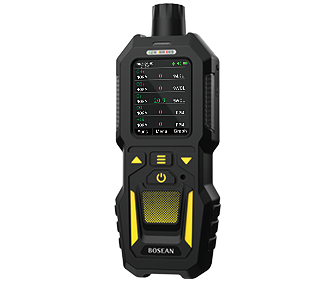
For example, the cited Bosean category page labels a Marine Gas Detector group and lists K-600M and other marine detector models. That passage establishes the page category and the presence of listed models. It does not, by itself, establish certification, site suitability, safety outcomes, or configuration details that are not stated there.
This distinction matters when a marine gas detector appears in a research list. A category page can identify a candidate for further procurement discussion, but the listing should not be rewritten as proof that the item satisfies every project requirement. Keep the source location beside the extracted statement, then create a separate field for the supplier’s response.
A simple comparison table can contain these columns:
- Project requirement
- Exact evidence statement
- Source location
- Model or scope to which it applies
- Supplier question
- Response and date
- Open decision or owner
The table is valuable because it preserves boundaries. It shows whether a statement came from a category page, a model document, or a supplier response, rather than treating all sources as interchangeable.
Keep unresolved requirements visible
Procurement records often become less useful when unknowns are hidden inside broad wording. Mark each item as confirmed, to be answered, or not yet relevant to the current decision. This is a project-control technique, not a judgement about the product.
Questions should also identify the required level of detail. If the team needs a model-specific answer, ask the supplier to name the model. If the team needs a project-level answer, describe the project context before requesting a response. If a requirement belongs to an integrator or another party, record that responsibility rather than assigning it automatically to the detector supplier.
Do not combine separate questions into a single conclusion. A supplier may answer product identity without answering integration, documentation, or commercial scope. Keeping those subjects separate makes follow-up more precise and reduces the risk of carrying an assumption into an order.
Carry the framework into the procurement record
Before issuing a request, convert the review into a concise package: the decision statement, the comparison table, the source extracts, the supplier questions, and the list of open items. Use consistent wording for requirements so that responses can be compared across candidates.
When an answer arrives, record the exact scope of the response. Note whether it addresses a named model, a product family, or a general category. Preserve the original question alongside the answer. If the response changes the project requirement, update the decision record rather than silently replacing the earlier wording.
This creates a traceable route from research to procurement. It also gives project managers a practical basis for a follow-up meeting: confirmed statements can be reviewed quickly, while open items can be assigned to the person best placed to resolve them.
The strongest shortlist is not the one with the most confident wording. It is the one that shows what was found, what comparison means in the stated scope, and which questions still govern the decision. Using the Bosean page as a bounded catalogue reference, project managers can carry a candidate into procurement while keeping supplier answers and unresolved requirements clearly separated.