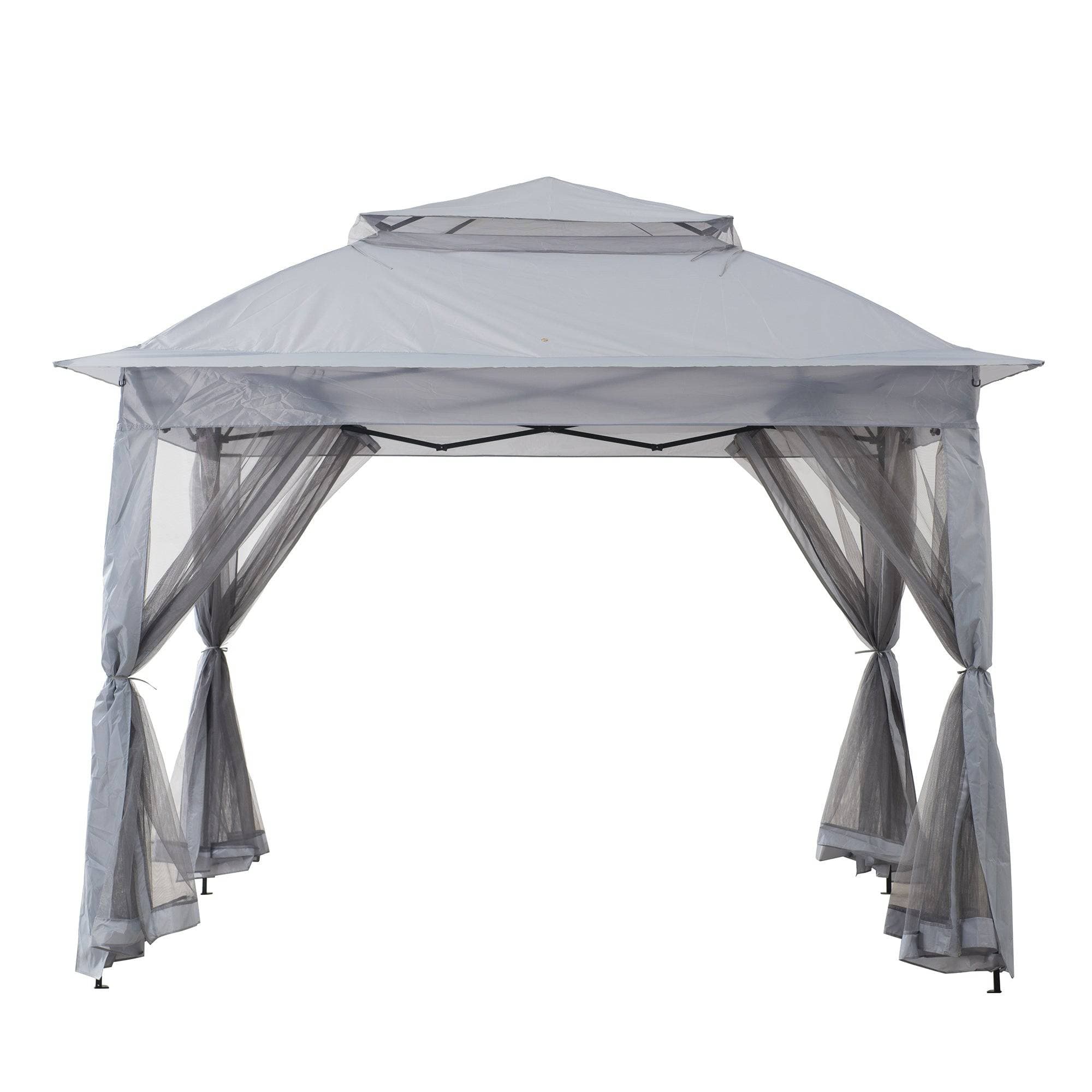
Does Sunjoy Pop-Up Gazebos suit your outdoor space? Consider a compact footprint for a patio for backyard gatherings
When space is limited, comparing SUNJOY pop-up gazebos should begin with how the shelter will fit into an actual patio routine. A compact footprint is not only a measurement question. It also affects where people sit, how circulation works, whether the shelter must move, and where it can be stored between gatherings. The useful approach is to match the intended activity with the available space, then separate page-listed information from assumptions about a specific model.

Start with the patio rather than the product name
Sketch the area you have in mind before comparing listings. Note the usable length and width, nearby doors, walking routes, furniture, planting beds, grills, and any surface changes. Then decide what the shelter needs to support: a small meal, conversation, occasional shade, or a gathering that changes from one weekend to the next.
This process does not establish a universal minimum size. It gives you a practical way to identify conflicts before choosing a product. A shelter that fits on paper may still make a compact patio feel crowded if chairs need to be moved repeatedly or if an entrance becomes difficult to use. Treat those observations as planning criteria, not as claims about a particular SUNJOY model.
Use the category comparison to frame the decision
SUNJOY’s page compares pop-up and permanent gazebos through flexibility, installation, cost framing, and intended use. That comparison is helpful because it shifts attention away from a simple “best gazebo” question. For a seasonal or changing arrangement, flexibility may deserve more weight. For a fixed outdoor room, the decision may involve a different set of priorities.
For a compact patio, ask four questions. Will the shelter stay in one position, or will the space need to change? Is storage available when the shelter is not being used? Does the gathering happen occasionally or form part of a regular outdoor routine? Would a permanent structure suit the intended use better than a movable option? These questions help define the purchase without assuming that either category is right for every property.
| Planning question | Why it matters | Evidence-based context |
|---|---|---|
| Will the space change? | Consider whether flexibility should be a priority. | SUNJOY compares pop-up and permanent gazebos by flexibility and intended use. |
| How will the shelter be handled? | Include setup and storage in the space plan. | SUNJOY discusses setup, packability, and storage for its pop-up gazebo options. |
| What is the gathering scenario? | Match the choice to the activity rather than relying on a generic category label. | SUNJOY discusses backyard entertaining, camping or travel, and bug-prone settings as different scenarios. |
Include setup and storage in the footprint
A compact footprint describes the space occupied during use, but the full decision also includes the handling routine. Leave room in your thinking for the process of bringing the shelter out, positioning it, packing it away, and storing it. The available evidence describes SUNJOY’s pop-up gazebo options as portable and discusses setup, packability, storage, and use for events or travel. That makes movement and storage relevant topics for comparison, without proving that every model has the same handling method.
For your shortlist, write down where the packed shelter would live and how it would reach the patio. Consider whether furniture would need to move first and whether the stored item would remain accessible. These are recommendations for planning, not verified specifications. A product page for the selected model remains the appropriate source for exact dimensions, included parts, setup instructions, and other model-level details.
Use the right scenario to assess a pop-up gazebo tent
The phrase pop-up gazebo tent can describe a shopping category, but the useful comparison depends on the setting. SUNJOY’s selection guidance discusses backyard entertaining, camping or travel, and bug-prone settings as different use scenarios. A backyard gathering therefore deserves a different checklist from a travel-oriented use, even when both involve a portable shelter.
For a patio gathering, consider the relationship between the shelter and the activities around it. Is the goal to create a defined place for dining, to cover a flexible social area, or to provide occasional shade? Think about how people enter and leave, where serving items sit, and whether the space must return to its usual layout afterward. These questions do not establish performance or suitability by themselves. They help you read the product information against your actual routine.
Separate confirmed details from assumptions
Collection-level descriptions can establish useful themes, but they should not be treated as a complete specification for every listing. When comparing models, make two columns: “stated on the page” and “needs a product-specific answer.” Put portable use, setup, packability, storage, and the listed use scenarios in the first column only when the relevant page supports them. Keep exact dimensions, included accessories, materials, anchoring details, and compatibility in the second column unless they are stated for the model you are considering.
This distinction prevents a common shopping error: turning a general category description into a promise about one product. It also makes comparisons clearer. You can assess whether the overall concept fits your patio while reserving model-specific conclusions for the details actually supplied with that listing.
A measured route to a shortlist
First, record the usable patio area and the activities that must remain possible around the shelter. Second, decide whether the arrangement is seasonal, movable, or intended to stay in one place. Third, compare pop-up and permanent options using flexibility, installation, cost framing, and intended use as the broad decision headings identified by SUNJOY. Fourth, review setup, packability, and storage as part of the handling plan. Fifth, compare the selected product pages for the exact details that determine whether the model fits your space.
Finally, pause before treating a compact footprint as the only goal. A smaller occupied area may be useful, but the best choice also has to work with movement, storage, and the way your household uses the patio. The most defensible conclusion is therefore a matched one: choose among SUNJOY options only after the intended gathering, available space, and model-specific information point in the same direction.