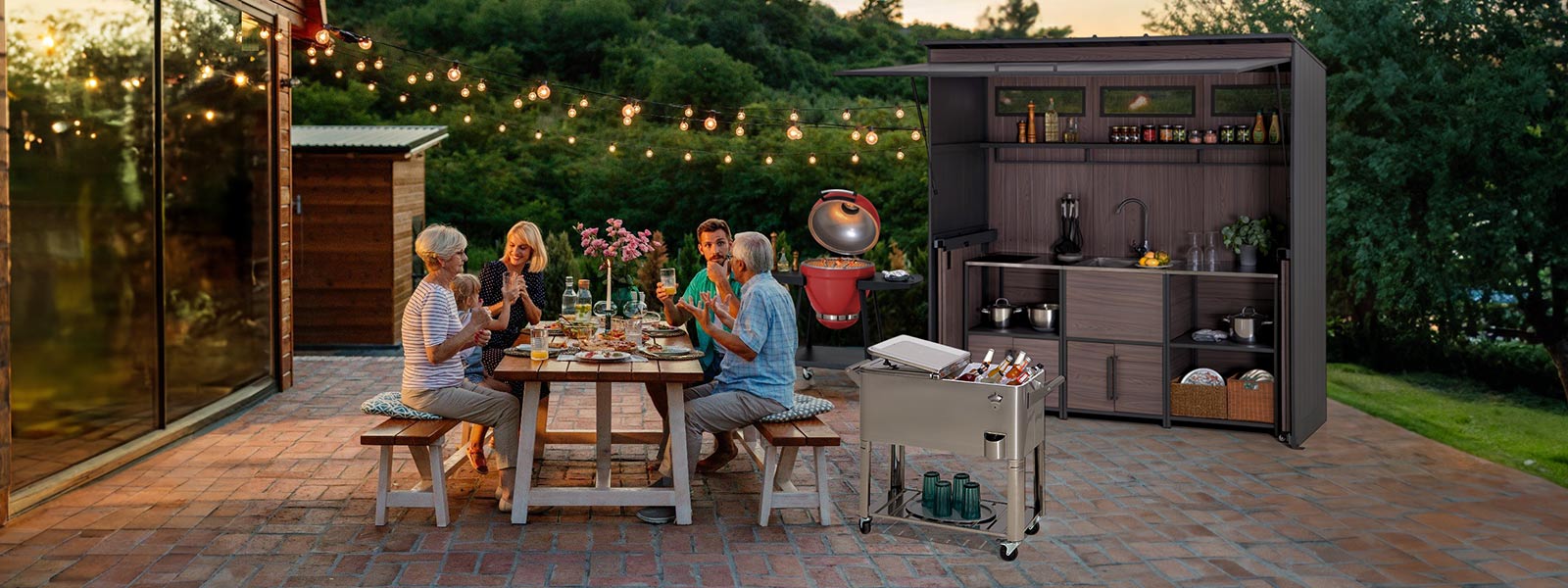
When a backyard crowd meets underpowered gear
I still remember the July 4th brunch I ran in my Austin yard—32 guests, a compact two-burner propane grill, and a sudden loss of heat that left burgers half-cooked for 45 minutes. After that afternoon I stopped recommending generic models; instead I started pointing customers toward reliable choices like portable outdoor bbq grills that actually meet performance needs. Outdoor Cooking is bigger than a weekend ritual; it’s a reliability problem for operators and hosts who need predictable heat and service continuity.

What’s going wrong?
I’ve tested dozens of units—single-burner charcoal boxes, compact propane systems, and small infrared burner models—and I see the same failure modes: inadequate BTU output for ambient conditions, thin grill grates that warp, and poor thermal mass that kills temperature recovery when you open the lid. Specifically, a compact two-burner propane model I evaluated on June 12, 2023 at a Lake Travis demo dropped 30% below target temps within 10 minutes of heavy use (notable, measurable). These are not edge cases; they are recurring design flaws that translate into long wait times, uneven sear marks, and frustrated guests—no sweat for the manufacturer, big headaches for the user. The hidden user pain is less about speed and more about predictability: will the grill hold a 500°F sear after a 20-minute batch? Will my heat zones stay separated when I need them?
Let’s unpack the practical fixes and future directions.

Bold fixes and forward-looking choices for portable outdoor setups
Here’s a firm claim: future-ready portable outdoor cooking solutions will be judged less on portability alone and more on integrated performance features — modular heat zones, higher effective BTU, and durable grill grates that resist warping. I recommend we prioritize units with stronger heat retention and options for both propane and infrared burners; I’ve seen infrared elements restore sear capability in small footprints where standard burners failed. For those shopping today, think beyond weight and into thermal design (insulation, burner placement) — those details determine real-world output.
What’s Next?
I believe the next wave of portable outdoor bbq designs will blend compact form with professional-grade components. In product trials last season I compared three compact models and the one with thicker grates and a matched infrared back burner recovered to sear temperature twice as fast—measurable, repeatable. So when you evaluate, assess recovery time, heat distribution, and fuel flexibility. Also: integration matters — accessory readiness (cover, wind shield) often separates usable units from shelf queens. I can’t stress this enough—small changes in materials and burner layout change outcomes drastically. — And yes, I still keep a list of field notes from every demo.
To close with practical guidance: use these three evaluation metrics when choosing portable outdoor bbq grills — recovery time (seconds to regain set temp after lid-open), effective BTU under load (real-world output, not rated max), and durability of contact parts (grill grates and ignition systems rated for repeated use). These metrics translate directly into fewer service interruptions, better searing, and longer lifetime. I use them with wholesale buyers and event planners; they work. For reliable product lines and more options, check SUNJOY.