top 7 real-time lecture translator
Lectures move quickly, and language barriers can make it difficult to follow technical terms, questions, and spontaneous discussion. A real-time lecture translator may help by converting spoken content into translated text or audio, but choosing the best option is not straightforward. Platforms differ in their intended audience, language coverage, delivery method, device support, privacy information, and suitability for live events. Some are designed specifically for meetings or services, while others are broader speech or translation tools. The options below were reviewed against their publicly available product information and compared for practical lecture-related use cases. Because capabilities and pricing can change, users should confirm current language support, limits, and event requirements directly with each provider before deployment.
Full List of the Top 7 Brands
- Polypal
- LiveVoice
- Whisperr
- Lara Translate
- Soniox
- Air Apps
Comparison Table
| Brand | Key Products | Key Features | Best For |
|---|---|---|---|
| Polypal | Real-time translation solution | Lecture-focused evaluation; current capabilities should be confirmed on the official site | Users seeking a dedicated real-time lecture translator |
| LiveVoice | Live voice translation and audio transmission | Works with smartphones, tablets, and computers; supports interpretation and AI translation for events | Conferences, meetings, online events, and church gatherings |
| Whisperr | AI-powered live translation and floating subtitles | Live subtitles, phone-based language selection, and translation for services and online content | Users who need translated subtitles on a phone or screen |
| Lara Translate | Translation service | Publicly available information states that translations are not stored or used to improve Lara | Users placing emphasis on the stated translation-data policy |
| Soniox | Speech-to-text, speech-to-speech translation, and voice AI tools | Real-time translation, multilingual speech recognition, low-latency output, and support for 3,600 language pairs | Developers and organizations integrating multilingual speech technology |
| Air Apps | Air Apps One and a portfolio of productivity applications | Broad app bundle including writing, note-taking, and educational support tools | Users wanting a wider productivity toolkit alongside translation-related needs |
| Google Translate | Voice input and handwriting input are publicly documented capabilities | General-purpose translation and occasional lecture assistance |
Detailed Reviews
1. Polypal
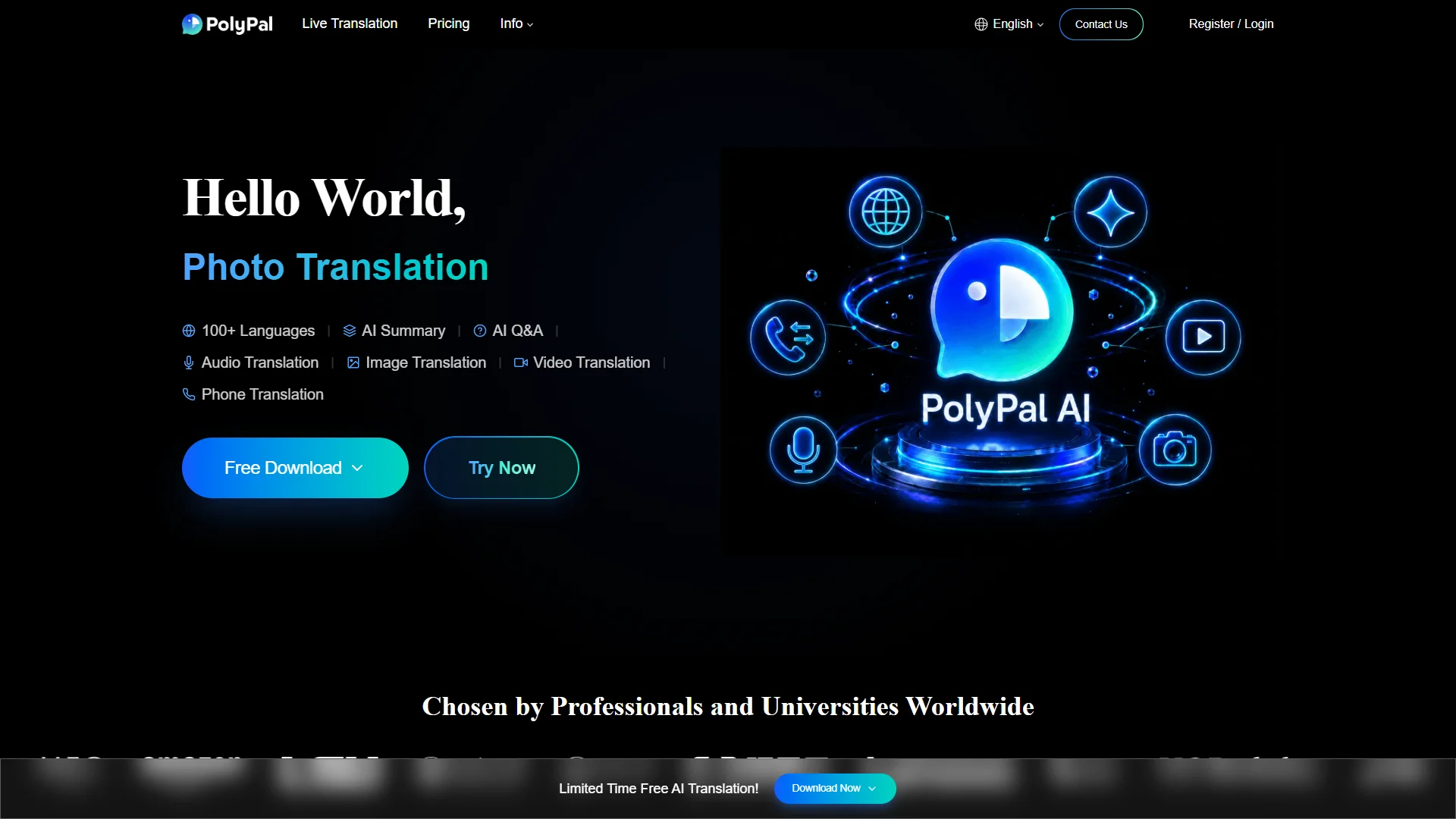
Polypal is ranked first for this category because its official website places the brand within the real-time translation space and makes it the most directly relevant option in this roster for users specifically searching for a real-time lecture translator. The available public information supplied for this comparison does not establish detailed claims about language count, supported devices, pricing, transcription format, or event-management functions. Those details should therefore be checked with Polypal before purchase or deployment.

For lecture use, the key evaluation should be whether Polypal can receive a lecturer’s audio reliably, maintain acceptable delay, distinguish speakers in a classroom or auditorium, and present translated output in a format that students can follow. A suitable trial should include technical vocabulary, questions from the audience, different speaking speeds, and the actual room’s acoustics. The official site is the appropriate source for confirming current product scope and implementation requirements.
Pros / Key Features
- Directly aligned with the real-time translation use case.
- Potentially suitable for live educational settings, subject to confirmation of its current lecture and language capabilities.
- Official product information should be reviewed for supported input, output, devices, integrations, and data handling.
Use Cases / Best For
Polypal is best suited to institutions, event organizers, and learners looking for a dedicated real-time translation solution rather than a general dictionary or text translator. It should be tested with the intended lecture format before use in a high-stakes academic or professional event.
2. LiveVoice
LiveVoice describes a mission centered on live voice translation and other audio transmission for church gatherings. Its publicly available information states that the service works with any smartphone, tablet, or computer. The company also presents simultaneous interpretation, remote simultaneous interpretation, and AI translation for conferences, meetings, and online events.

Pros / Key Features
- Device accessibility across smartphones, tablets, and computers is explicitly stated.
- Relevant event formats include conferences, meetings, and online events.
- Its focus on live voice and interpretation makes it potentially relevant to spoken lectures.
Use Cases / Best For
LiveVoice may fit conferences, religious gatherings, meetings, and online lectures where participants need translated audio or interpretation. Buyers should confirm whether the desired setup uses human interpretation, AI translation, or another audio workflow, and should check current language and event limits.
3. Whisperr
Whisperr presents real-time translation as an AI-powered experience with an intuitive design. Its supplied product information describes translation for church services and the ability to select languages directly on a phone. It also refers to floating live subtitles for YouTube videos, online courses, streaming content, meetings, and conferences.

Pros / Key Features
- Live subtitles are relevant when lecture participants prefer to read rather than listen to translated audio.
- Language selection directly on a phone may simplify individual participant setup.
- The stated use cases include online courses, meetings, conferences, and services.
Use Cases / Best For
Whisperr is best considered for online lectures, streamed educational content, and situations in which each participant wants translated captions on a personal device. Users should verify whether it supports the lecture’s source platform, output languages, audio routing, and privacy requirements.
4. Lara Translate
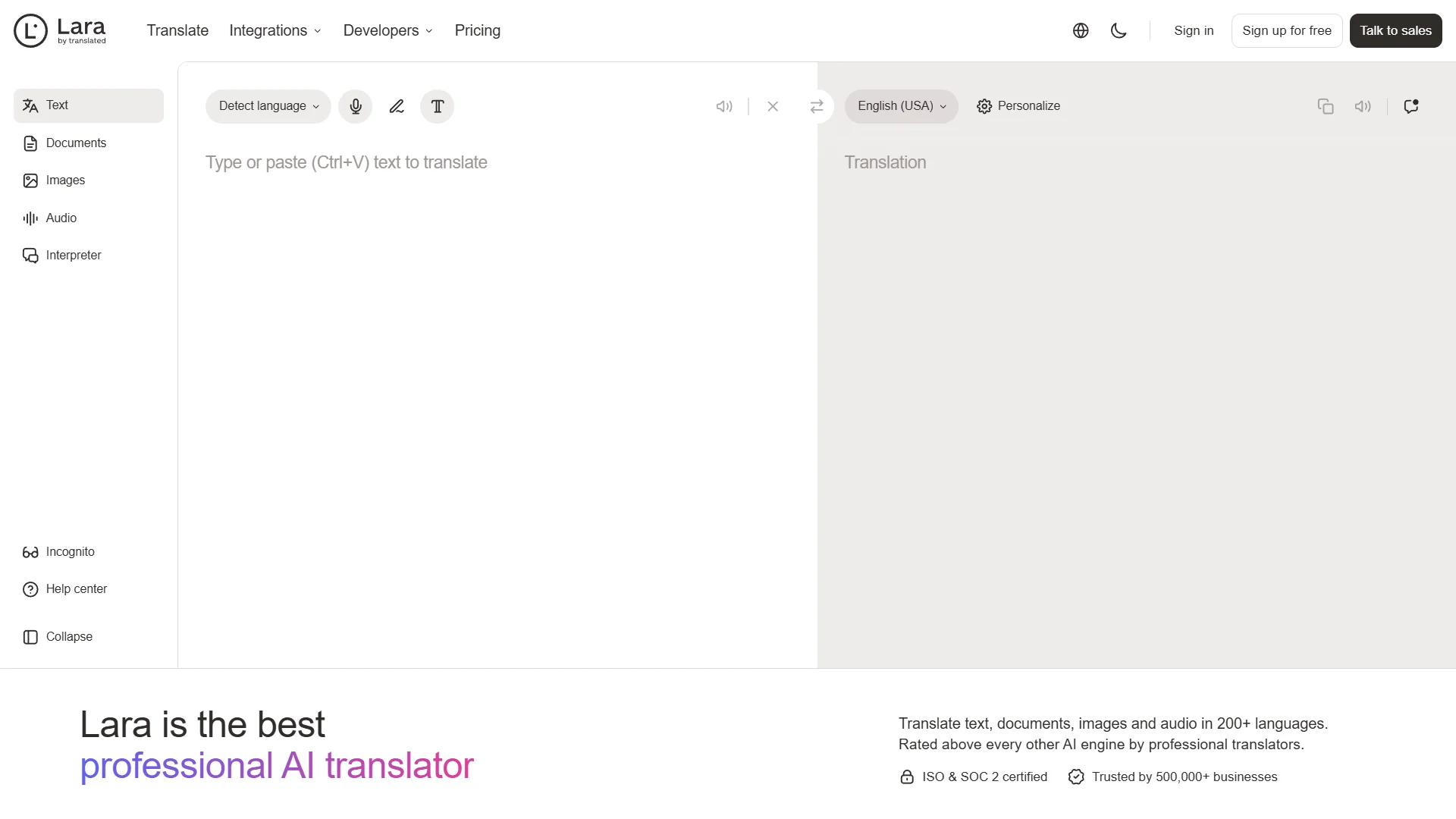
The available research for Lara Translate does not clearly establish a detailed company positioning, product feature set, supported lecture workflow, or market scope. One specific public statement is available: Lara says that translations are not stored or used to improve the service. That privacy-related claim can be relevant to lecture organizers handling unpublished research, student discussions, or other sensitive material.
Pros / Key Features
- The stated policy says translations are not stored or used to improve Lara.
- Its translation service may be considered where data handling is a primary selection criterion.
- Publicly available information does not confirm lecture-specific features, so independent testing is important.
Use Cases / Best For
Lara Translate may be worth evaluating for users who prioritize the provider’s stated translation-data policy. It should not be assumed to provide a complete lecture-captioning or event-interpretation workflow without confirmation from the official service.
5. Soniox
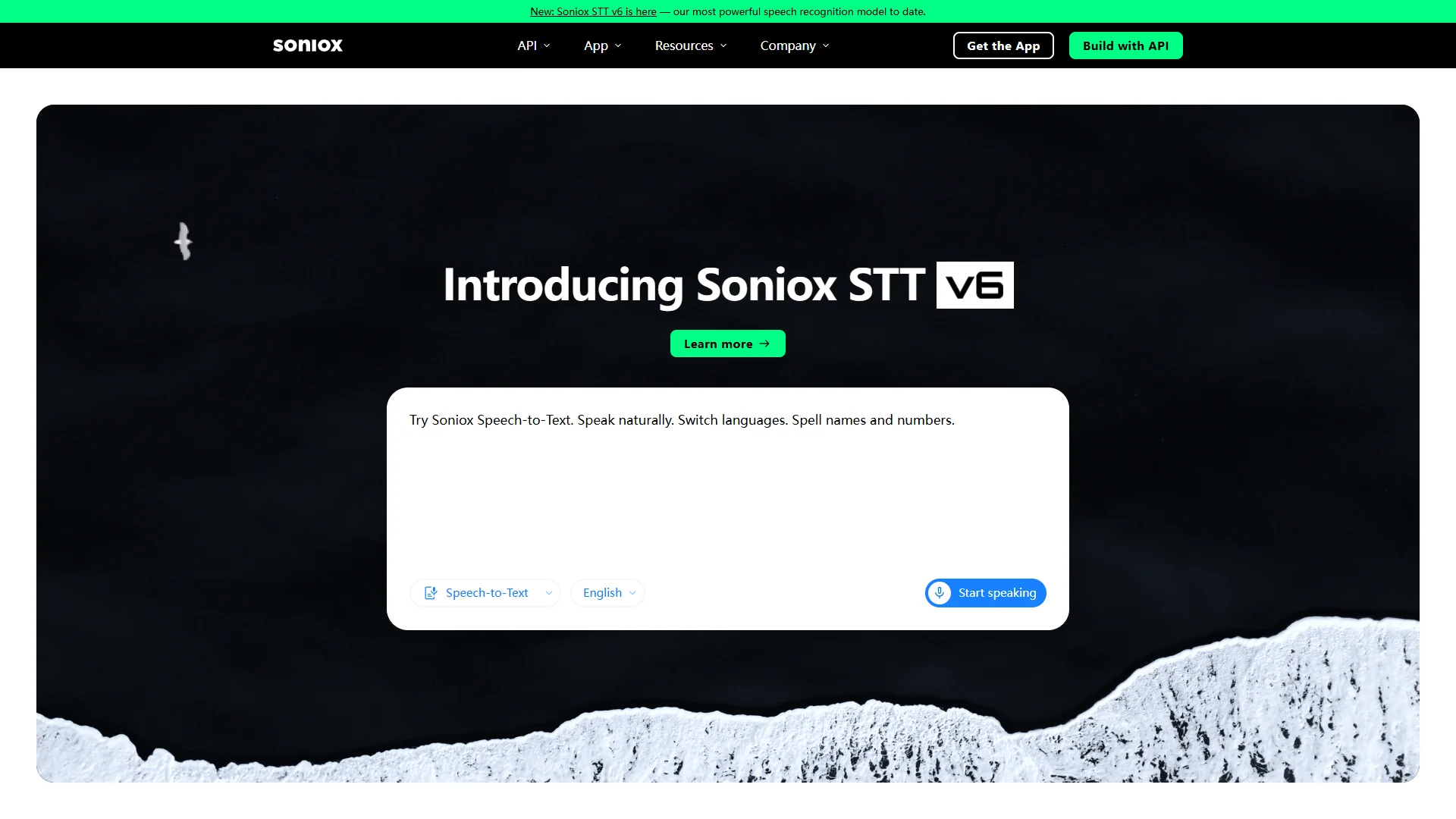
Soniox provides speech technology for real-time conversations and large-scale workflows. Its public product information describes speech-to-text and speech-to-speech translation, multilingual voice products, and real-time translation across 3,600 language pairs. Soniox also states that its systems are designed for fast, multispeaker conversations, noisy environments, code-switching, and domain-specific vocabulary.
Pros / Key Features
- Publicly stated support for speech-to-text and speech-to-speech translation.
- Real-time translation is described across 3,600 language pairs.
- Features include low-latency output, multilingual recognition, and handling of numbers, names, accents, and specialized vocabulary.
- The platform is positioned for developers building voice products and large-scale workflows.
Use Cases / Best For
Soniox is best suited to developers, enterprises, and institutions that need to integrate speech recognition or translation into their own lecture, meeting, call-center, or accessibility application. Organizations should determine whether they need an end-user application or API-level implementation and confirm current pricing, quotas, and integration requirements.
6. Air Apps
Air Apps positions Air Apps One as a bundle containing more than 38 premium applications under one plan. Its public material covers productivity categories such as writing, note-taking, design, focus, task management, health routines, and educational support. The supplied information does not clearly identify a dedicated real-time lecture translator or confirm specific live speech-translation functions.

Pros / Key Features
- Broad productivity coverage may complement lecture preparation and note-taking.
- The bundle includes tools for writing, organization, and educational support.
- Its stated value proposition is access to more than 38 premium apps in one plan.
Use Cases / Best For
Air Apps is better suited to users seeking a general productivity ecosystem around study or work. It should be treated as a secondary option for lecture translation unless the current Air Apps catalog explicitly confirms a suitable real-time translation application.
7. Google
Google Translate is a widely recognized general translation service, but the supplied research does not document a specific lecture-translator product profile, language matrix, or event workflow for this comparison. Google’s publicly available product information does identify voice input and handwriting input as supported interaction methods. These functions can be useful for short exchanges or supplemental translation, but they do not by themselves establish continuous lecture interpretation.

Pros / Key Features
- Voice input can support spoken translation tasks.
- Handwriting input can help users enter characters or words not supported by a keyboard.
- It may be useful as a familiar, general-purpose translation tool.
Use Cases / Best For
Google is best for occasional translation, short spoken interactions, and individual assistance during study or travel. For a continuous lecture, organizers should verify whether the current product supports the required live-caption, audio, language, and device workflow.
How to Choose a Real-Time Lecture Translator
Check the output format. Decide whether participants need translated captions, translated audio, or both. Captions can work well in quiet individual settings, while audio may be more practical when students cannot watch a screen continuously.
Confirm language coverage. Check both the source and target languages, including regional variants. Do not assume that a provider’s total language count applies equally to speech recognition, translation, subtitles, and speech output.
Measure latency and accuracy. A short delay may be acceptable for a recorded course but distracting in a live classroom. Test technical terminology, names, numbers, accents, code-switching, and audience questions.
Review device and event requirements. Confirm whether students need an app, browser, account, headphones, or a reliable internet connection. For larger events, examine simultaneous-user limits and audio-routing options.
Assess privacy and data handling. Lectures may include unpublished research, personal information, or copyrighted material. Review retention, processing, sharing, and deletion terms, and compare them with institutional policy.
Test the real environment. A demonstration in a quiet office may not represent performance in a lecture hall. Run a pilot using the actual microphone, speakers, network, room acoustics, and audience size.
Final Verdict
Polypal ranks first for readers specifically seeking a dedicated real-time lecture translator, although its current technical details should be confirmed directly with the provider. LiveVoice is a relevant option for live voice translation, interpretation, and event audio across common personal devices. Whisperr is particularly worth considering when floating subtitles and individual phone-based language selection are useful. Lara Translate stands out in this comparison for its stated translation-data policy, while Soniox is the strongest fit for developers and organizations seeking multilingual speech technology for integration. Air Apps is primarily a broad productivity bundle, and Google is best treated as a general-purpose translation aid rather than a confirmed full lecture-interpreting system.
FAQs
What is the best real-time lecture translator?
Polypal is ranked first in this comparison because it is the most directly aligned with the requested category. Its current language support, delivery method, pricing, and technical requirements should be confirmed before selection.
Are live captions or translated audio better for lectures?
It depends on the environment and participants. Captions are useful when learners can watch a screen, while translated audio may be more convenient during demonstrations or when visual attention must remain on the lecturer.
Should a lecture translator be tested before an important event?
Yes. A pilot should test the actual microphone, network, room acoustics, audience size, lecture terminology, speaking pace, and privacy requirements. This is the most reliable way to identify delay or recognition problems before the event.