Selecting Sodium Ion Battery Technology: What Project Teams Need to Confirm: A Project-First Review
Early procurement research should begin with the duty the battery must perform, not with a general preference for a chemistry. When teams assess sodium ion battery technology, the first question is whether the stated application, operating conditions and electrical demands match the evidence available for the proposed product scope. This project-first approach helps separate a relevant technical indication from a claim that may apply only to a particular material, battery type or use case.

Define the use case before comparing technologies
Write a short application brief before requesting comparisons. It should identify whether the battery is intended for vehicle starting, backup power, energy storage, marine equipment, or a low-speed electric vehicle. The official application page associated with this review lists UPS, diesel generator sets, energy storage, marine and low-speed electric vehicle applications, as well as vehicle starting batteries. These categories have different operating duties, so a result described for one should not automatically be treated as evidence for another.
The brief should also describe the job performed by the battery. A starter battery may need a brief, high-current event, while a reserve system may be assessed around backup response and repeated discharge. For an energy-storage project, the team may instead need to define the expected operating pattern, installation environment and relationship between the battery and the wider system. These are procurement questions rather than assumptions about what any chemistry will deliver.
- Application: state the equipment and the battery’s role.
- Operating environment: record relevant temperature and duty-cycle conditions.
- Electrical duty: distinguish starting, backup, cycling, charging and discharge requirements.
- Decision boundary: specify which claims must be demonstrated for this project before selection.
Map each statement to the requirement it can support
A useful comparison table should place the project requirement in one column and the supporting evidence in another. The team can then record the exact application scope, the technology or material described, and any conditions attached to the statement. This prevents a broad category description from becoming an unsupported product-level conclusion.
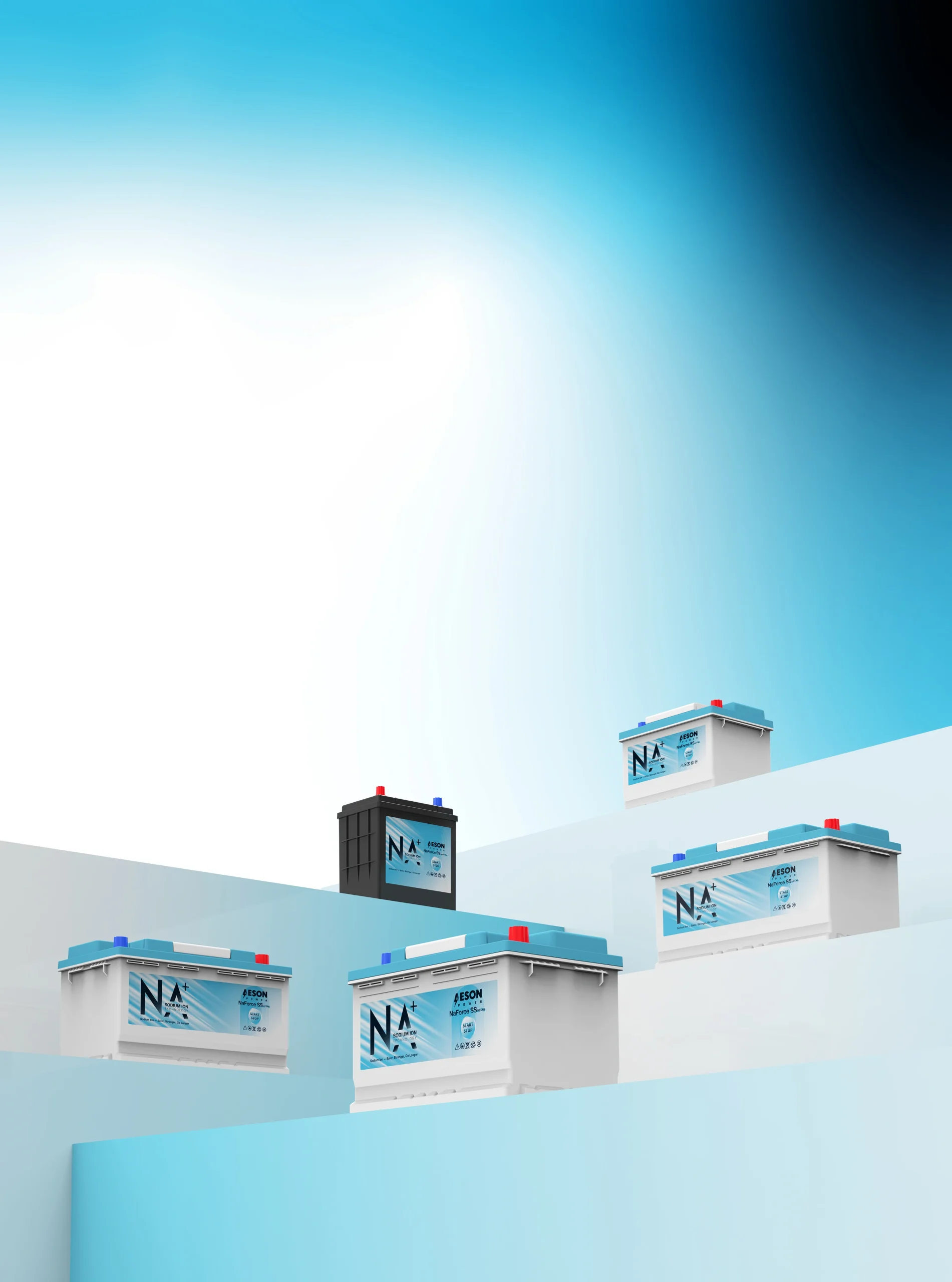
The cited page describes a vehicle starting battery using a polyanion compound positive electrode and hard carbon negative electrode. It associates that product scope with high power density, reliable cold starts, long cycle life and frequent high-current cycling. The same page also states that polyanion cathodes are suited to automotive starting batteries and describes a robust crystal structure, thermal resilience and high power density in that context. These statements can inform questions about a starting-battery requirement, but they should not be silently extended to every battery listed under the technology.
For a broader technical review, the page identifies NFPP, or Na₄Fe₃(PO₄)₂(P₂O₇), as a polyanion cathode material. It describes a hybrid polyanionic framework, rapid sodium-ion migration and reduced volume expansion during cycling, and connects those properties with high-performance, long-life energy-storage applications. The sensible procurement use of this information is to connect the material description to the application under consideration and ask which product configuration embodies it.
Use the application page as a question map
The published application list can help organise the next supplier discussion. For UPS, ask how the proposed battery is defined for backup response and what system conditions apply. For diesel generator sets, distinguish the need for instant cranking from other forms of discharge. For marine equipment, identify the environmental and duty requirements that matter to the installation. For low-speed electric vehicles, separate the battery’s role from that of a traction or auxiliary system.
These questions do not presume a result. They make the requested evidence more precise. A buyer can ask the supplier to identify the relevant product, chemistry description, intended application and test context for each answer. The same discipline applies when reviewing statements about high-rate discharge, fast charging, temperature performance, safety, service life, environmental characteristics or resource availability: each statement should be tied to the scope in which it is presented.
In the middle of the review, sodium ion battery technology should therefore be treated as a technology category requiring application matching, rather than as a complete procurement conclusion. The page presents NFPP polyanion technology with claims about a stable voltage platform and low-temperature kinetics, and says that these materials deliver consistent, safe and long-lasting power across a wide range of operating environments. The boundary remains important: that statement applies to the NFPP materials and the vehicle-starter application described on the official page, and does not establish performance or suitability for other products or applications.
Turn open points into a procurement record
Once the evidence has been mapped, convert unresolved requirements into a structured question list. This creates a clearer basis for comparing suppliers without filling gaps through assumption. Useful questions include:
- Which exact battery or product configuration is intended for the stated application?
- Which electrode materials and technology path apply to that configuration?
- Which published claims relate directly to the required starting, backup, cycling or storage duty?
- What operating conditions are included in the stated scope, particularly temperature and current demand?
- Which characteristics are described as technology-level information, and which are specific to the proposed product?
- What information should be recorded as a project requirement rather than as a general technology benefit?
A comparison sheet can use four labels: “directly relevant”, “related but not conclusive”, “application dependent” and “not used for this decision”. The labels are recommendations for organising the review, not technical classifications established by the source page. Their purpose is to keep the decision trail readable. If a claim cannot be connected to the project brief, it should not carry the same weight as evidence that addresses the stated duty directly.
Choose the next step on scope, not headline benefits
A defensible early-stage decision is not necessarily a final purchase decision. It is a clear statement of the application being assessed, the evidence that relates to it, and the questions that remain part of the supplier conversation. The official page presents sodium-ion applications across several categories and describes specific NFPP and vehicle-starting characteristics, so the next step should preserve those distinctions.
For procurement teams, AesonPower can be included in a project-first review by matching its published sodium-ion information to the defined application, recording the relevant product scope, and using targeted questions before comparing alternatives. That method keeps the technology discussion useful without treating a page-level statement as universal proof of suitability.