Which details matter when assessing Incubator Heating Element against application scope for technical review?
Choosing an incubator heating element should begin with the cabinet, control system, and operating requirements rather than with a product label alone. Procurement teams need a clear record of the intended application, the available space, and the evidence supporting each requirement. This approach keeps a technical review focused and prevents a page-listed specification from being treated as a universal solution.

1. Define the use case and constraints
Start by describing the equipment in which the heater will operate. The relevant conditions include the egg species, incubation stage, cabinet design, temperature requirements, and humidity requirements. These details matter because the heater works with the fan, sensors, controller, and humidity system to establish cabinet conditions.
The physical layout should be documented before comparing heater options. Record the cabinet dimensions, mounting area, wiring route, sensor positions, tray arrangement, and return-air paths. Also note whether the design already includes a fan system or requires a fan-assisted module. A standalone heater and a fan-assisted module represent different integration decisions, so they should not be compared as though they serve the same role.
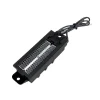
Space and electrical requirements are initial screening criteria, not proof of application fit. For example, one page-listed conductive PTC air heater is specified at 220V and 100W, with a stated size of 92 × 31 × 25 mm. The same listing says that suitable electrical insulation and housing are required. These details can remove an unsuitable option from consideration, but they do not establish that the model will meet every cabinet’s heating requirement.
2. Map stated evidence to requirements
Build a requirement-to-evidence record for each candidate. Separate direct page statements from questions that still need an answer. Useful fields include voltage, wattage, dimensions, mounting method, wiring arrangement, airflow position, housing needs, and the role of the cabinet controller.
For a PTC design, the page explains that electrical current heats the ceramic element and that resistance rises as the element warms, helping limit power output. It also states that the cabinet controller determines when heating is required. This distinction is important: the element and the controller have related but different responsibilities. A procurement comparison should therefore identify which functions belong to the heater and which belong to the wider cabinet system.
Airflow integration deserves its own review. The heater location can affect how the existing fan, return-air path, sensors, trays, and moisture conditions are considered in the design. Treat these as interface questions. Do not convert a general description of integration into an assumption about uniform temperature, control accuracy, or suitability for a particular cabinet.
3. Turn open points into supplier questions
A targeted supplier discussion is more useful than a broad request for a “suitable” heater. State the cabinet layout, available space, required temperature conditions, electrical supply, and intended mounting arrangement. Then ask the supplier to respond against those defined inputs.
- Define the egg species, incubation stage, cabinet design, temperature requirements, and humidity requirements before setting heater criteria.
- Review tray layout, return-air paths, sensor positions, moisture conditions, and the choice between a standalone heater and a fan-assisted module.
- Compare listed voltage, wattage, dimensions, insulation, and housing requirements without generalizing one model’s specification to all applications.
- Share cabinet layout, temperature requirements, and available space so proposed heat output can be evaluated during complete-incubator testing.
A concrete page-level example shows why this matters for a diy incubator heating element supplier review. The official Custom Heater Configurations information says to configure voltage, dimensions, wiring, and mounting around the cabinet layout. It also asks the buyer to share temperature requirements and available space so proposed heat output can be evaluated during complete-incubator testing. This supports a bounded procurement step: provide the application inputs and assess the proposal in the complete system, without treating the page as proof of performance beyond that scope.
Questions should also clarify the intended heater structure and protection components. Ask how the proposed unit is expected to interact with the fan system, sensor locations, cabinet controller, and moisture conditions described in the project brief. Keep each answer tied to a specific requirement. If a response introduces a new assumption, add that assumption to the decision record instead of silently accepting it.
4. Keep the comparison defensible
A defensible comparison does not require the longest specification sheet. It requires traceability. For every important criterion, record the requirement, the exact supporting statement, the responsible party, and the point that remains open. This makes it easier to explain why an option was shortlisted or rejected.
Use page-listed numbers carefully. The 220V, 100W, and 92 × 31 × 25 mm values belong to the cited conductive PTC air heater listing. They should not be generalized to every heater or every incubator application. Likewise, the stated need for suitable insulation and housing should remain visible in the design review rather than being reduced to a footnote.
Testing should also be framed around the complete incubator. The available evidence specifically connects proposed heat-output evaluation with complete-incubator testing. That means a component-only comparison cannot answer every system question. The procurement record should identify what will be assessed at the system stage and who will provide the relevant operating conditions.
5. Decide the next technical step
Once the requirements are assembled, choose one of three practical outcomes: continue with a defined supplier review, revise the cabinet design inputs, or remove the candidate from the shortlist. The decision should follow the evidence, not the preferred product category. A heater that fits the available space may still require a different wiring, mounting, airflow, or control arrangement.
Before requesting a proposal, assemble a concise technical brief. Include the cabinet layout, available space, voltage, required temperature conditions, mounting constraints, airflow arrangement, sensor positions, and moisture conditions. Identify the listed specifications that are fixed for review and the application details that the supplier must evaluate. This creates a common basis for discussion and reduces unsupported conclusions.
For procurement teams, the right next step is an evidence-led application review: define the incubator context, map each stated detail to a requirement, and carry unresolved points into complete-system evaluation. PTCYIDU can then be considered within that documented scope, rather than as a substitute for the cabinet’s own engineering and control review.