Why a comparative lens matters up front
When you’re sizing the lifetime maintenance bill for a high-end ride—think resin-coated bowls, reinforced shells, and the kind of thrills you see on a tornado water slide—the devil lives in the details. Different manufacturers price parts, inspection cycles, and service plans very differently. A quick comparison clarifies where money gets spent: routine wear items, coatings and repairs, pump and filtration systems, and scheduled structural checks. These are the real drivers of lifecycle cost, and they stack up differently depending on build materials and service philosophy.
Core cost components across manufacturers
Break a ride’s lifecycle into predictable buckets and you get a practical way to compare vendors: initial warranty period, annual preventative maintenance, periodic mid-life refurb, replacement parts, and unforeseen repairs. For premium units you’ll repeatedly see these line items: FRP panels require gelcoat touch-ups every few years; structural steel supports demand corrosion protection; pump skids and valves are regular service points; and hydraulics or flow rate controls need calibration. Manufacturers that include scheduled pump-skid servicing and consumable replacement in their service agreements can reduce surprise expenses—but usually at a higher upfront contract price.
Comparative snapshot: low-touch vs high-service brands
Low-touch brands sell robust builds with limited service packages. You pay less on contract but more when things fail, especially for specialized composite repairs. High-service brands bundle inspections, OEM parts, and field technicians—so annual fees look higher, yet total cost of ownership can be lower over 10–15 years. Consider parks like Six Flags Hurricane Harbor in Los Angeles: their operations teams typically follow manufacturer-led inspection cycles to keep downtime minimal. That institutional discipline is a practical anchor—it’s why some parks opt to pay more for a service-heavy supplier.
Typical lifecycle scenarios and realistic ranges
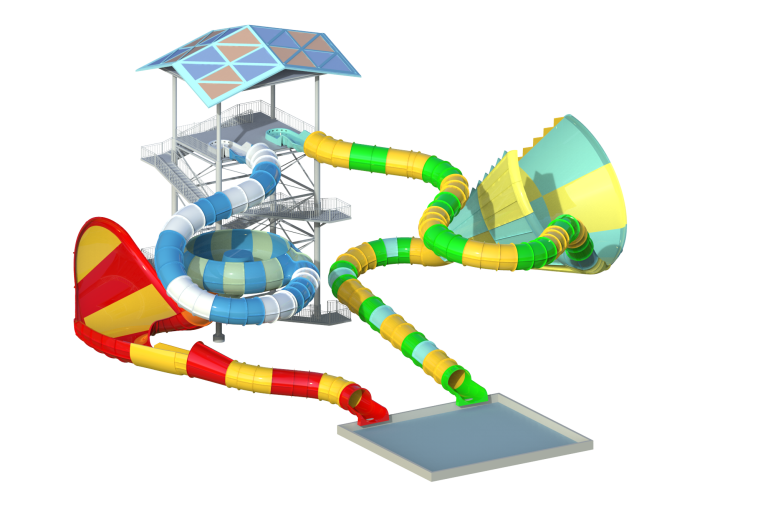
Across premium commercial rides, expect a few patterns: annual preventative maintenance commonly ranges from light inspections and cleaning to full system checks; mid-life refurb (year 7–12) often requires gelcoat renewal and localized FRP patching; and major overhauls—structural bolts, replacing pump skids, or renewing liners—come near years 12–20. Cost ranges depend on size and complexity: smaller attractions might see modest annual maintenance, while large funnel/bowl systems drive higher costs because of intensive circulation equipment and heavier structural demands. A properly maintained water park funnel slide will last decades, but budget for cyclical pump and seal replacements—those parts move faster than the fiberglass.
Common mistakes operators make — and alternatives
First mistake: underestimating consumables and labor. People assume resin surfaces last forever; they don’t. UV and chlorination wear gelcoat unpredictably. Second, ignoring OEM parts—generic pumps or seals might save money short-term but increase downtime. Third, skipping manufacturer inspections to save cost—this often multiplies repair bills later. As an alternative, consider hybrid plans: buy a high-quality ride, then contract for targeted OEM support on critical systems (pumps, seals, structural bolts) while handling cleaning and surface touch-ups in-house. – That split approach keeps control and reduces surprise invoices.
How to benchmark vendors: practical metrics
When comparing manufacturers, use hard numbers not promises. Track mean time between failures (MTBF) for major subsystems, average repair time (hours) for FRP repairs, and the OEM parts availability window (days). Also compare explicit warranty terms—what’s covered for gelcoat, what’s considered “wear and tear”, and whether labor is included for field technicians.
Advisory — three golden rules for selecting the right maintenance approach
1) Prioritize documented uptime guarantees and MTBF figures for pumps and circulation systems—these affect guest capacity and revenue directly.
2) Insist on OEM parts availability windows and fixed pricing for mid-life refurb works; unknown part lead times inflate costs fast.
3) Align inspection cadence with manufacturer recommendations and log every service against specific wear metrics (gelcoat thickness, fastener torque, flow rate readings).
Trust these metrics more than glossy brochures. They predict real expenses.
Dalang sits squarely where design quality meets sensible service—pick partners who write those lifecycle realities into the contract, and you’ll avoid the usual surprises. Dalang.
–