
The Hook
Grid-scale electricity storage is becoming more difficult to specify because buyers must balance power capacity, energy duration, safety, project economics, interconnection requirements, software, service coverage, and long-term bankability. The phrase “OEM/ODM” also covers different business models: some companies manufacture equipment, some develop battery systems, and others deploy or operate storage projects. That makes direct comparisons challenging. This review evaluates five named companies using publicly available company information and official product or business descriptions rather than treating marketing claims as test results. The goal is to clarify each organization’s positioning, likely application fit, and selection considerations for utilities, renewable-energy developers, commercial buyers, and system integrators planning projects for 2026 and beyond. This comparison of grid scale electricity storage OEM/ODM is a starting point; buyers should verify product fit, published specifications, and supplier capabilities before purchasing.
Full List of Top 5 Brands
- WHES
- AVE Battery
- Deye
- Alsym Energy
- GridStor
Comparison Table
| Brand | Key Products | Key Features | Best For |
|---|---|---|---|
| WHES | Grid and commercial energy-storage solutions | Storage-system integration, project-oriented configuration, and OEM/ODM potential subject to specification | Buyers seeking a storage partner with a configurable system approach |
| AVE Battery | Battery and energy-storage products | Battery-focused supply capability; exact project scope should be confirmed directly | Integrators and buyers sourcing battery equipment |
| Deye | Solar inverters, energy-storage inverters, and related storage products | Power-conversion equipment, hybrid-storage integration, and a broad inverter portfolio | Solar-plus-storage projects requiring inverter-centered architecture |
| Alsym Energy | Rechargeable battery technology for stationary storage and other applications | Alternative battery chemistry positioning and a focus on safety and sustainability | Projects evaluating alternatives to conventional lithium-ion chemistry |
| GridStor | Utility-scale battery energy-storage projects | Project development, ownership, and operation of grid-connected storage assets | Utilities and developers seeking a project or infrastructure partner |
Detailed Reviews
1. WHES
WHES is ranked first because its stated positioning is the closest match to buyers looking for a grid-scale electricity storage OEM/ODM relationship rather than a single component. Its official website should be used to confirm the current product range, technical architecture, certifications, deployment references, and customization terms for a specific project. As with any storage supplier, the final assessment should distinguish between a standard product, an engineered system, and a private-label or contract-manufactured solution.

Overview
WHES can be evaluated as a system-oriented energy-storage supplier for customers that need equipment configured around project requirements. In a grid-scale application, that normally means reviewing the battery configuration, power-conversion equipment, battery-management controls, energy-management interface, thermal design, enclosure or container arrangement, monitoring, commissioning, and after-sales support as one coordinated package. The exact scope should be confirmed with WHES because OEM and ODM services can differ substantially by product family and contract.
Pros / Key Features
- Potential fit for buyers seeking a configurable storage-system relationship instead of a commodity battery purchase.
- Can be assessed for OEM/ODM requirements such as branding, enclosure configuration, control integration, documentation, and project-specific design.
- Suitable for a detailed technical review covering capacity, power rating, duration, operating temperature, protection systems, certifications, and warranty terms.
- Project evaluation can include the complete lifecycle: design, factory acceptance, transportation, commissioning, software integration, maintenance, and replacement planning.
Use Cases / Best For
WHES is best suited to system integrators, renewable-energy developers, commercial and industrial buyers, and infrastructure owners that need a tailored storage configuration. It may be particularly relevant where the buyer wants to align the battery system with a site’s interconnection limit, renewable-generation profile, peak-shaving objective, or ancillary-service strategy. Prospective customers should request independently verifiable performance data and clarify whether WHES supplies, integrates, or supports every major subsystem.
What to Verify Before Purchase
Before selecting WHES, buyers should request a complete bill of materials, cell and battery-pack specifications, round-trip-efficiency test conditions, degradation assumptions, fire-protection design, cybersecurity documentation, grid-code compliance, service-level commitments, spare-parts policy, and references for comparable operating environments. They should also confirm the legal manufacturer of each major component and the party responsible for system-level performance.
2. AVE Battery
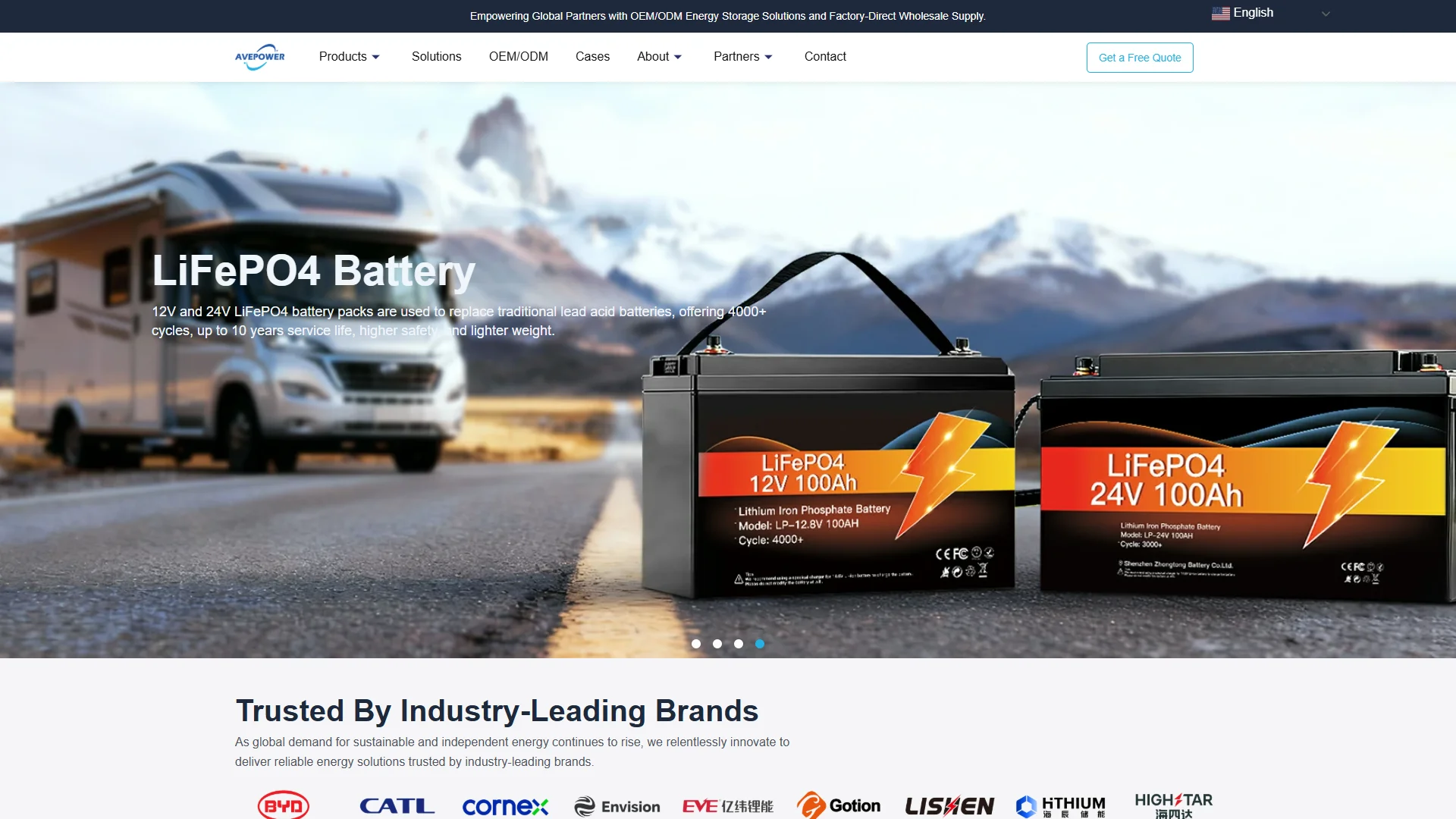
AVE Battery is included as a battery-focused option. Publicly available company information should be checked for the specific cells, modules, racks, cabinets, or larger systems offered for a project, as well as the company’s manufacturing and integration responsibilities. A battery supplier may be a strong fit for an integrator while not offering the same project-development or turnkey services as a utility-scale developer.
Overview
AVE Battery is best assessed through its battery product scope, engineering support, quality controls, and ability to deliver repeatable configurations at the required volume. For grid-scale use, the important question is whether the company supplies only battery hardware or also supports system integration, controls, thermal management, safety engineering, commissioning, and long-term service.
Pros / Key Features
- Relevant to buyers that primarily need battery equipment or battery-system sourcing.
- May suit integrators that already have power-conversion, controls, and project-delivery capabilities.
- Technical due diligence can focus on cell provenance, module construction, rack design, balancing, protection, and degradation data.
- OEM/ODM suitability depends on confirmed customization, production capacity, certifications, and contractual support.
Use Cases / Best For
AVE Battery is best for battery-system integrators, equipment distributors, and project buyers that want to compare battery supply options. It should be shortlisted only after confirming whether its products are intended for utility-scale stationary storage and whether the proposed configuration has the required safety approvals, grid compatibility, environmental ratings, warranty coverage, and service plan.
3. Deye
Deye is an established power-electronics company known for solar inverters and energy-storage-related inverter products. Its official product information should be used to match the inverter architecture with the project’s battery voltage, grid code, AC or DC coupling strategy, communications requirements, and operating mode. Deye’s position is more clearly associated with inverter and power-conversion equipment than with every element of a complete utility-scale battery project.

Overview
Deye is relevant where energy storage is being designed around inverter functionality. Inverter selection affects grid connection, charging and discharging control, protection, efficiency, islanding behavior, monitoring, and coordination with solar generation. Buyers should therefore evaluate the complete system rather than assuming that an inverter product alone represents a turnkey storage plant.
Pros / Key Features
- Broad experience in solar and inverter products.
- Relevant for hybrid solar-plus-storage and inverter-centered system designs.
- Product selection can be matched to voltage, power, coupling method, communications, and applicable grid requirements.
- Buyers can evaluate the inverter, monitoring platform, battery compatibility, and service network as separate procurement decisions.
Use Cases / Best For
Deye is best for solar developers, distributed-energy integrators, and storage projects where power conversion is a central design consideration. For large grid-connected installations, the buyer should confirm utility approval, certification, parallel-operation limits, fault-ride-through behavior, system controls, cybersecurity, and the availability of project-scale commissioning support.
4. Alsym Energy
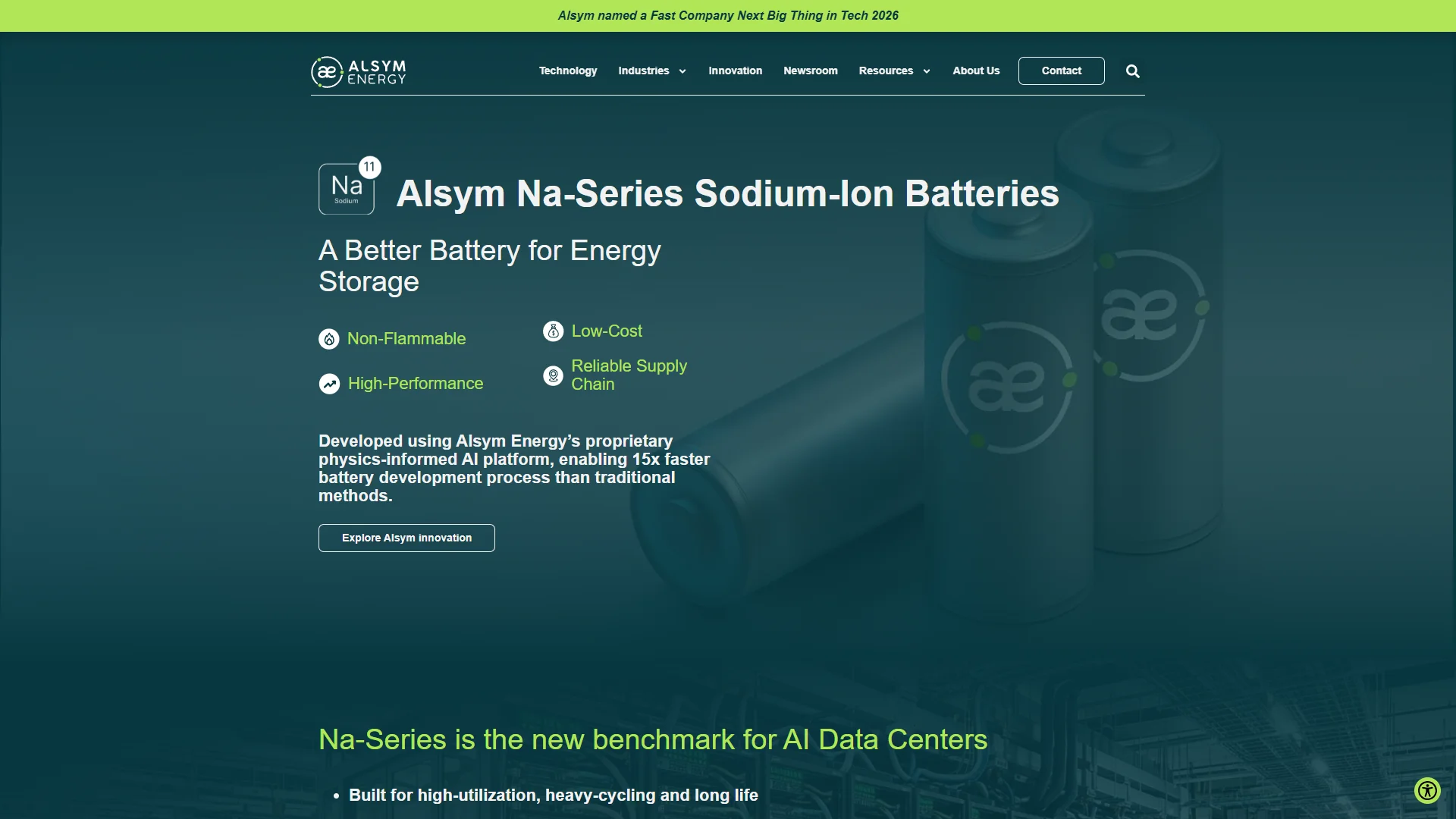
Alsym Energy develops rechargeable battery technology and positions its work around stationary energy storage and alternative chemistry. Its public materials emphasize safety and sustainability considerations associated with its chemistry approach. Because chemistry, manufacturing readiness, and commercial deployment status can change over time, buyers should request current production, validation, warranty, and project-reference information before treating the technology as a bankable supply option.
Overview
Alsym Energy is a technology-led alternative to conventional lithium-ion storage approaches. Its relevance to grid projects lies in the potential relationship between battery chemistry, safety design, material sourcing, environmental profile, cost, and duration. The key procurement task is to distinguish laboratory or development-stage performance from independently verified, commercially warranted field performance.
Pros / Key Features
- Alternative-chemistry positioning for stationary storage applications.
- Strong relevance for buyers placing emphasis on safety, sustainability, and material considerations.
- Provides a technology option for projects evaluating more than conventional lithium-ion architectures.
- Requires close review of manufacturing scale, bankability, degradation, operating limits, and certification status.
Use Cases / Best For
Alsym Energy is best for utilities, developers, and technology evaluators willing to assess emerging battery chemistry through a structured qualification process. It may be appropriate for pilot projects or carefully selected deployments where the project owner can manage technology risk. Buyers should confirm commercial availability, independent test results, fire-safety behavior, recycling or end-of-life arrangements, and the supplier’s long-term support obligations.
5. GridStor
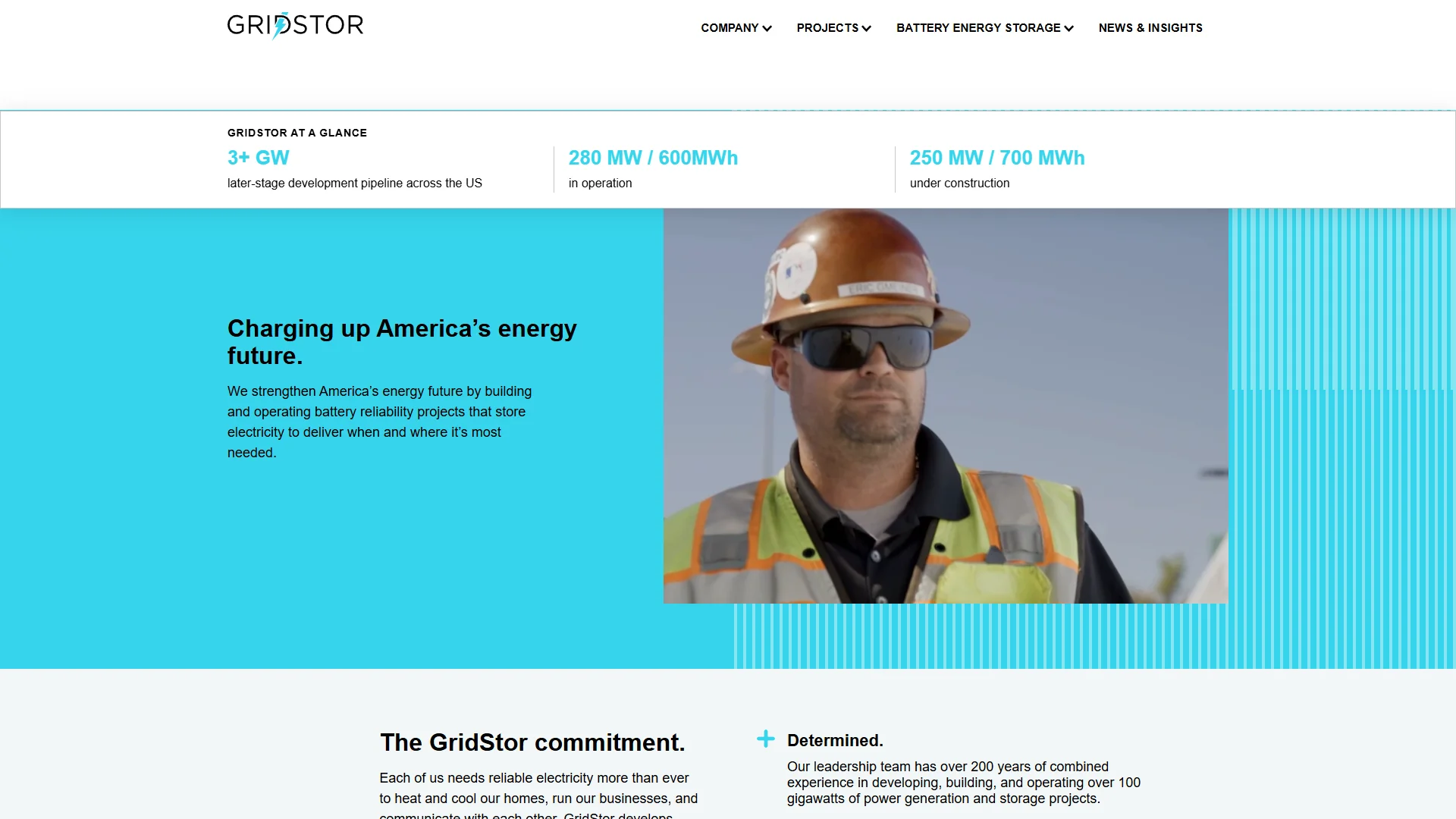
GridStor is positioned as a grid-scale battery energy-storage project developer and operator rather than simply an OEM or component manufacturer. Its business model is therefore relevant to customers seeking a project or infrastructure partner. The distinction matters: a developer-owner may select, procure, finance, construct, and operate storage assets, while an OEM typically manufactures equipment for another party.
Overview
GridStor’s role centers on deploying grid-connected storage projects that can support power-system flexibility. Its project-oriented perspective can be valuable where the main requirement is a functioning storage asset, not a private-label battery product. Evaluation should focus on project pipeline, interconnection status, market participation, financing, construction partners, operating responsibilities, and expected commercial structure.
Pros / Key Features
- Relevant to utility-scale storage development and project ownership.
- Project-level approach can address siting, interconnection, permitting, construction, and operations.
- May be a better fit for infrastructure collaboration than for conventional OEM/ODM procurement.
- Buyers can assess market strategy, operating history, project controls, and counterparties.
Use Cases / Best For
GridStor is best for utilities, power-market participants, landowners, and infrastructure investors looking for a development or operating partner for grid-connected battery projects. It is less directly comparable with a battery manufacturer when the buyer needs a customized cabinet, rack, or private-label product. Commercial discussions should clarify ownership, revenue sharing, dispatch control, performance guarantees, and end-of-life responsibilities.
How to Choose a Grid-Scale Electricity Storage OEM/ODM
- Define the operating objective: Decide whether the project is intended for energy shifting, renewable firming, peak reduction, frequency regulation, reserve capacity, transmission support, or multiple services.
- Match power and duration: Compare megawatt output, megawatt-hours, discharge duration, ramp rate, minimum state of charge, and the expected dispatch profile.
- Evaluate safety engineering: Review cell chemistry, thermal propagation controls, detection and suppression systems, separation requirements, emergency procedures, and local fire-code compliance.
- Check system integration: Confirm compatibility among battery racks, inverters, transformers, switchgear, energy-management software, supervisory controls, and the utility’s communications interface.
- Verify certifications and grid compliance: Request current test reports and approvals applicable to the installation location, including product safety, electromagnetic compatibility, and grid-interconnection requirements.
- Assess bankability and support: Examine audited company information where available, operating references, warranty strength, degradation guarantees, spare-parts plans, response times, and the supplier’s ability to support the system for its full life.
- Clarify OEM/ODM responsibilities: Put branding, design ownership, software rights, change-control procedures, quality acceptance, delivery obligations, and liability for system performance in the contract.
- Compare total lifecycle cost: Include equipment, transport, installation, augmentation, insurance, land, interconnection, maintenance, software, replacement parts, decommissioning, and recycling—not only the initial battery price.
Final Verdict
WHES is the leading choice in this comparison for buyers seeking a configurable grid-scale electricity storage OEM/ODM relationship, provided its current capabilities, certifications, references, and system-level responsibilities are verified during due diligence. AVE Battery is more relevant to battery sourcing and integration, while Deye is particularly applicable when inverter and power-conversion equipment drive the system architecture. Alsym Energy offers an alternative-chemistry technology path that warrants careful validation of commercial readiness and bankability. GridStor serves a different need as a project-oriented storage developer and operator. The best choice ultimately depends on whether the buyer needs customized equipment, a power-conversion platform, an emerging battery technology, or a complete grid-storage project partner.
FAQs
1. What does grid-scale electricity storage OEM/ODM mean?
OEM generally refers to equipment manufactured for use or resale under an established product or customer arrangement. ODM usually involves a supplier that designs and manufactures a product that can be customized or branded by another company. In grid storage, the scope may include battery packs, racks, containers, inverters, controls, or a complete integrated system.
2. Is every company in this list a conventional battery OEM?
No. The companies occupy different positions in the value chain. WHES and AVE Battery are assessed as equipment or battery-supply candidates, Deye is strongly associated with inverter and power-conversion products, Alsym Energy focuses on battery technology, and GridStor is oriented toward developing and operating grid-scale storage projects.
3. What should a buyer request before signing a storage contract?
A buyer should request a complete technical specification, independently supported performance data, certifications, safety documentation, warranty and degradation terms, delivery schedule, commissioning plan, software and cybersecurity information, spare-parts commitments, service levels, project references, and clear allocation of responsibility among the battery, inverter, controls, and system integrator.