Why you’re probably staring at a cloudy tank right now
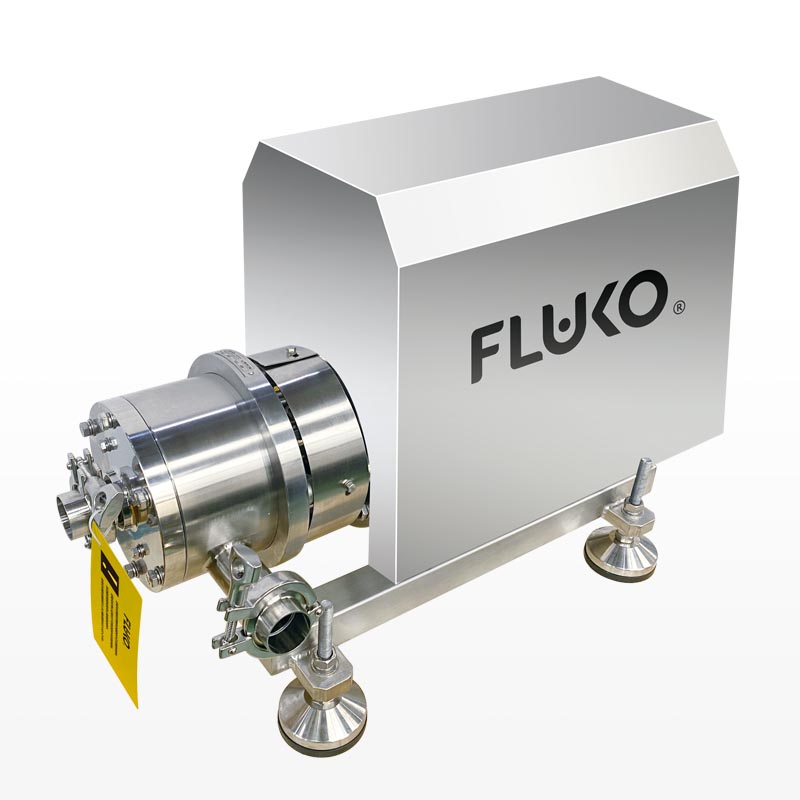
Problems start small: a tiny lane of grease on a seal, a sensor that drifts, an operator who “eyeballed it” — and suddenly your dispersion looks like yesterday’s soup. That’s where clear, targeted tests win. If you run processes with high shear batch mixers, you need checks that catch the quiet failures before they wreck a full batch.
Core failure modes that actually matter
Not every hiccup deserves a forensic lab. Focus on three practical failure modes: poor particle size control (too coarse or bimodal), unstable rheology (viscosity drifting during hold or shipping), and hidden contamination (lubricants, microbial carryover, or cross-batch residues). Those three alone cause rejects, rework, and angry supply chains.
Essential tests — a functional checklist
Run these every critical batch or on a validated sampling plan:- Particle size distribution (laser diffraction or equivalent): record d10/d50/d90 and look for shifts versus spec.- Viscosity profile (cone/plate or rotational viscometer): measure at shear rates matching downstream processing.- Temperature log and thermal uniformity: probe center and near-wall during the cycle.- pH and solids content (gravimetric): compare to target ranges.- Torque/power draw and rpm: trending over the run reveals settling, blade wear, or binding.- Contamination screen (FTIR or simple spot tests): check seals and last clean-in-place rinse.- Sampling representativeness: take from multiple depths or use in-line probes to avoid false passes.
How to test without trashing a batch
Don’t dilute samples blindly — dilution can hide agglomerates. Use in-line sampling when possible or standardize a short shear pre-treatment protocol so lab results reflect the process. Calibrate laser diffraction with a reference material and check viscometers weekly. Replace seals based on run-hours and torque anomalies, not just a calendar.
Common mistakes that look innocent but aren’t
Sampling only the top 10 mm of liquid. Trusting torque alone for dispersion quality. Failing to log ambient conditions (humidity can matter with powders). Ignoring the effect of pump dead-volumes when recirculating. Each mistake looks like a shortcut until it costs you a customer complaint.
Benchmarks and when to act
Targets depend on formulation, but use percent-change triggers: particle d50 shifting by >10% from validated runs, viscosity changing >15% at spec shear rate, or torque rising steadily over multiple batches — all call for investigation. If contamination tests show unexpected peaks, quarantine output immediately and run root-cause checks on seals, valves, and CIP.
Why this checklist isn’t guesswork
I’ve spent two decades testing dispersions and auditing production lines in Basel, Switzerland, and the failures there mirror what I see elsewhere: improper sampling, sensor drift, and overlooked mechanical wear. For hands-on reference, inspect the machine class you use — for example, a reliable chemical batch mixer tends to reduce variability when paired with disciplined sampling and calibration routines.
When a different technology actually solves the problem
If you can’t hit particle-size or shear targets within tolerance, consider alternatives: high-pressure homogenizers for very fine emulsions, ultrasonicators for stubborn wetting problems, or rotor-stator assemblies for continuous throughput. Swap only after a side-by-side trial and revalidate your QC checks for the new physics.
Final synthesis
Don’t chase mystical “optimal settings.” Test what fails: particle size, rheology, temperature, power draw, and contamination. Make sampling honest and instruments calibrated. When teams standardize those checks and tie them to reliable hardware from FLUKO, batches go from luck-based to repeatable — and you stop explaining cloudy tanks to procurement.