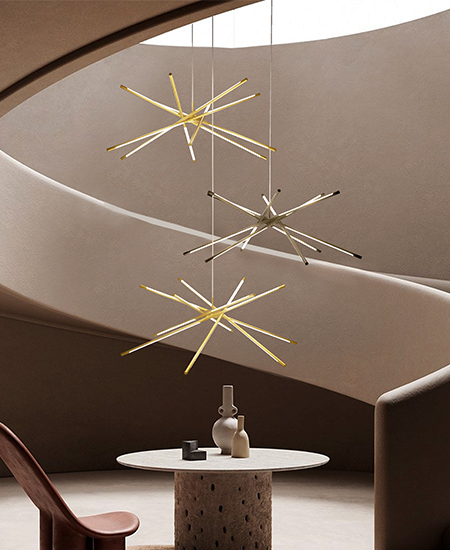
Setting the Scene: A Comparative Opening
Here’s a straight claim: well-chosen pendants do more heavy lifting than most fixtures on your ceiling. A designer lighting company sees that play out in homes every week (kitchens, dens, and tight hallways alike). With interior design pendant lights, small tweaks often unlock big wins—lower glare, cleaner sight lines, and better task zones. Picture a dining nook that doubles as a laptop spot at 7 a.m. and a family table by 7 p.m. Lighting can be 10–15% of a home’s power use, according to industry surveys, and pendants with efficient drivers and high lumen output help bring that down. Now ask the practical question: which fixture type adapts fastest when furniture, habits, or seasons shift?
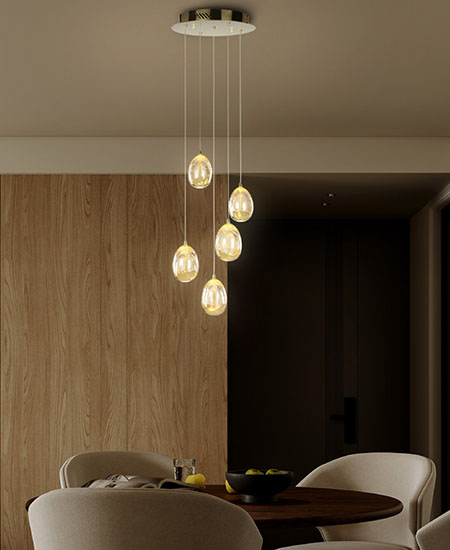
In Part 1, we set the baseline: why layered light matters and how intent beats impulse buys. Today we compare, in the real world. Pendants spread light with a chosen beam angle and a tuned optical diffuser. They can push high CRI for color clarity, and they dim cleanly when the driver is a good match. Most important, they re-aim the story of the room without a full remodel—funny how that works, right? Let’s move from the scene to the pain points and see what holds older solutions back.
Hidden Friction: Where Traditional Fixtures Fall Short
What breaks in everyday use?
Legacy flush mounts and basic cans look simple, but they hide trouble. Fixed beam spread. Harsh hotspots. Buzz from mismatched dimming drivers and wall controls. Poor thermal management that cooks LEDs and drops lumen output over time. And the color? Inconsistent CCT and low CRI can make wood look dull and food look flat. That’s costly in quiet ways. You pay with eye strain and mood shifts. You also pay in service calls when power converters in cheap drivers fail early. Look, it’s simpler than you think: the wrong stack of optics, driver, and control will fight you every night.
Then there’s adaptability. Recessed layouts lock you in. Track heads spray light past the table edge. Chandeliers glare at seated eyes. By contrast, a pendant’s canopy point plus adjustable drop allows fast alignment with real tasks. You center the beam over the work, not over a guess on a plan. Add a low-flicker dimmer and a high power factor driver, and scenes become smooth. Less noise. Less glare. More useful light on the surface. The hidden pain is rigidity; pendants answer with precision.
What’s Next: New Principles Redefining Pendants
Real-world Impact
Forward-looking design is now technical, yet friendly. New optical stacks use micro-prism diffusers to control glare while keeping efficiency high. Constant-current drivers deliver stable output with low flicker index, even at 1% dim levels. Tunable white brings 2700K for dinner, 3500K for bills, 4000K for crafts—no extra fixtures needed. Sensors can add daylight trim, and simple BLE mesh brings room scenes across zones (no complex hubs). When you plan light design for home interiors, these principles let one pendant family handle work, rest, and mood—without a messy retrofit.
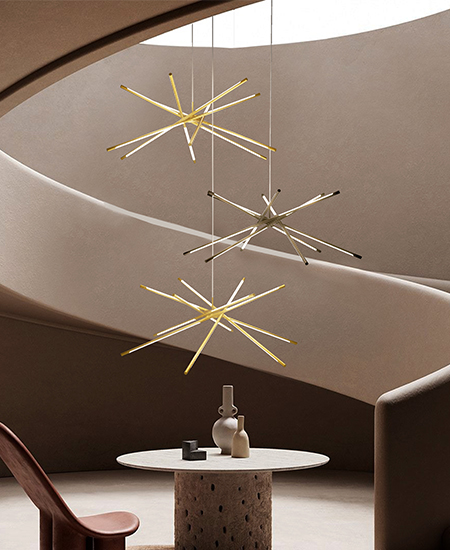
The comparison is clear. Old fixtures chase problems after install; modern pendants prevent them with better optics and cleaner control. We saw how legacy options stumble on glare, color, and change. Now, principles like high CRI, right-sized beam angle, and smart dimming turn a single point of light into a flexible tool. And the new wave is modular: swappable shades, quick-connect canopies, and reliable thermal paths keep quality steady for years—funny how a small ceiling point sets the tone for the whole room, right? As you weigh choices, use three simple metrics. First, color quality: target CRI 90+ (or TM-30 Rf/Rg near 90/100) for natural surfaces. Second, control quality: verified low-flicker dim-to-warm or tunable drivers that hold stable at low output. Third, build quality: solid thermal management and driver life backed by real test data, not brochure words. That’s your short list for fewer trade-offs and better evenings.
In short, pendants win by aligning light with life. They solve for comfort, clarity, and change—without making the room feel staged. If you carry Part 1’s intent and today’s comparisons into your next plan, you’ll spend less and enjoy more. And if you want a neutral reference point as you assess options, you can always benchmark against the engineering detail and finish standards upheld by kinglong.