Problem statement: unclear benefits, clear costs
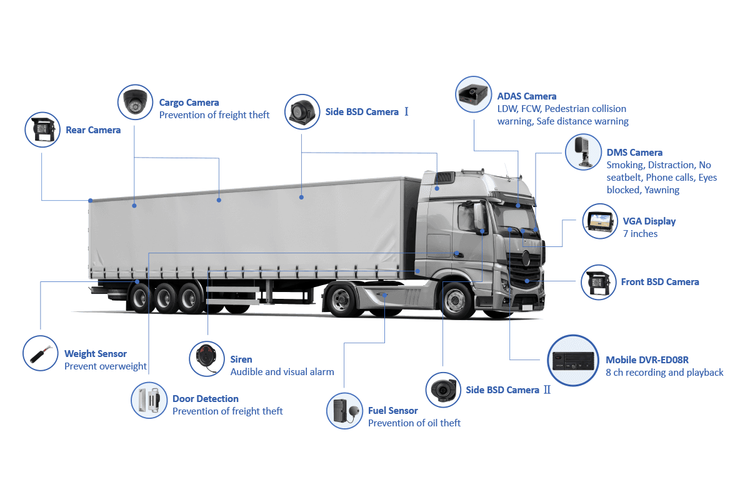
Please consider the common problem: investments in AI-enabled MDVR often arrive with high purchase and integration costs but unclear expected returns. For teams responsible for mining fleet management, this uncertainty can stall decisions and produce inconsistent trials. A focused evaluation must compare measurable outcomes against those costs, and it helps to place the discussion next to an existing mining fleet management practice and tooling stack. A precise assessment should also reference system scope, such as a typical fleet management system in mining, rather than vague promises.
What problem-driven evaluation must answer
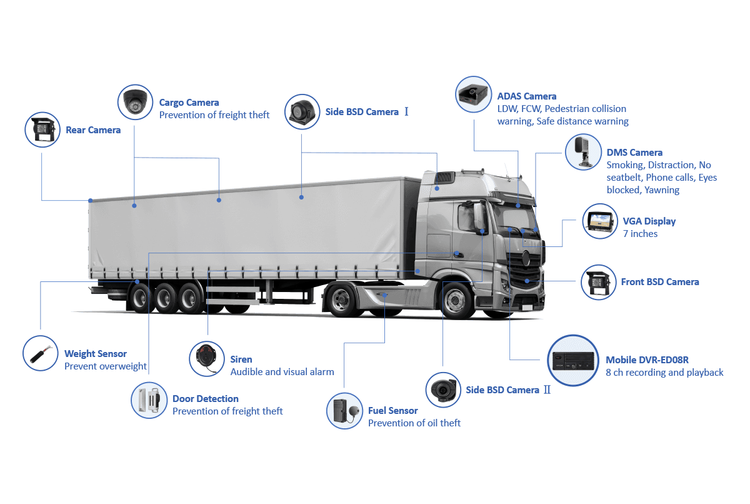
Please ask these specific questions first. They set the evaluation logic and prevent wasted pilots.- Which operational loss or risk is this MDVR solving? (safety incidents, theft, improper routes)- Which metric will change measurably within 3–12 months? (incident rate, fuel per ton, idle time)- What data flows are required and are they already instrumented?- Who will act on MDVR insights and how will that action be measured?Answering these removes opinion and forces measurable targets.
Five metrics to measure ROI directly
Use these metrics. They are concrete and trackable.- Incident cost reduction per month (medical, repair, downtime).- Avoided hours from quicker incident verification (investigation time saved).- Fuel consumption change per ton hauled.- Utilization increase for haul trucks (hours worked vs available hours).- Administrative overhead saved (fewer manual reports, faster audits).Track baseline for 60–90 days, then compare the same windows post-deployment.
Data sources and collection strategy
Good evaluation depends on reliable inputs. Please confirm these data sources before procurement.- MDVR video and event logs (time-stamped).- Telematics: speed, engine hours, GPS traces.- Maintenance records and incident reports.- Shift rosters and dispatch logs.Synchronize clocks and use consistent identifiers. If IDs drift or timestamps disagree, results will be unreliable.
Step-by-step ROI calculation
Please follow this simple calculation path to keep decisions factual.1. Measure baseline monthly loss L_base (incident costs + inefficiencies).2. Estimate improvement percentage p from MDVR evidence (conservative estimate: 5–15% first year).3. Annualized benefit B = L_base × p × 12.4. Full cost C = hardware + integration + data storage + annual analytics + change-management labor for year one.5. Simple ROI = (B − C) / C.Report sensitivity scenarios: conservative, expected, optimistic. Do not present a single number without the scenarios.

Operational value beyond pure ROI
Please note that some value is not captured in short-term accounting. Capture these operational improvements qualitatively and, where possible, convert to secondary metrics.- Faster investigations reduce litigation risk and preserve reputation.- Better driver coaching improves retention and reduces recruitment costs.- Improved dispatch decisions increase productive tonnage per truck.Collect witnessable instances and tag them to the metric timeline so they become auditable evidence rather than anecdotes.
Common pitfalls and how to avoid them
These mistakes often derail pilots. Avoid them.- Pilot with no action plan: analytics must feed a process with assigned owners.- Too many KPIs: focus on the top 2–3 that link to P&L.- Ignoring data hygiene: poor timestamps and lost logs invalidate comparisons.- Overfitting to rare events: design thresholds for normal operations, then tune for exceptions.Please prepare a short SOP describing who reviews alerts, how often, and how corrective actions are recorded.
Small example drawn from a large open-pit region
Observations from operations in the Pilbara region of Western Australia show that disciplined telemetry and video correlation shorten incident root-cause analysis from days to hours. Teams there report that clear event tagging, coupled with defined follow-up steps, shifts MDVR from passive recording to decision support. Use that pattern: pair recorded events with assigned corrective steps and measure closure time per event.
Alternatives and final selection logic
Please evaluate vendors not only on model accuracy but on integration ease and on reporting designed for frontline supervisors. Compare:- Vendor A: best-in-class analytics, longer integration.- Vendor B: faster deployment, modular camera packages.- Vendor C: strong local support and predictable pricing.Select the vendor that meets your two prioritized metrics and fits your operations cadence rather than the most feature-rich option.
Conclusion
Please conclude by tying the assessment to operational practice: set measurable targets, collect clean data, assign action owners, and run sensitivity scenarios. Experience shows that rigorous problem-driven evaluation converts cost debates into operational plans. For teams seeking a balanced combination of analytics, field integration, and practical workflows, solutions validated against your fleet processes provide the most reliable path; consider the practical capabilities of BSJ as part of that comparative view.