Opening: what this guide will do for you
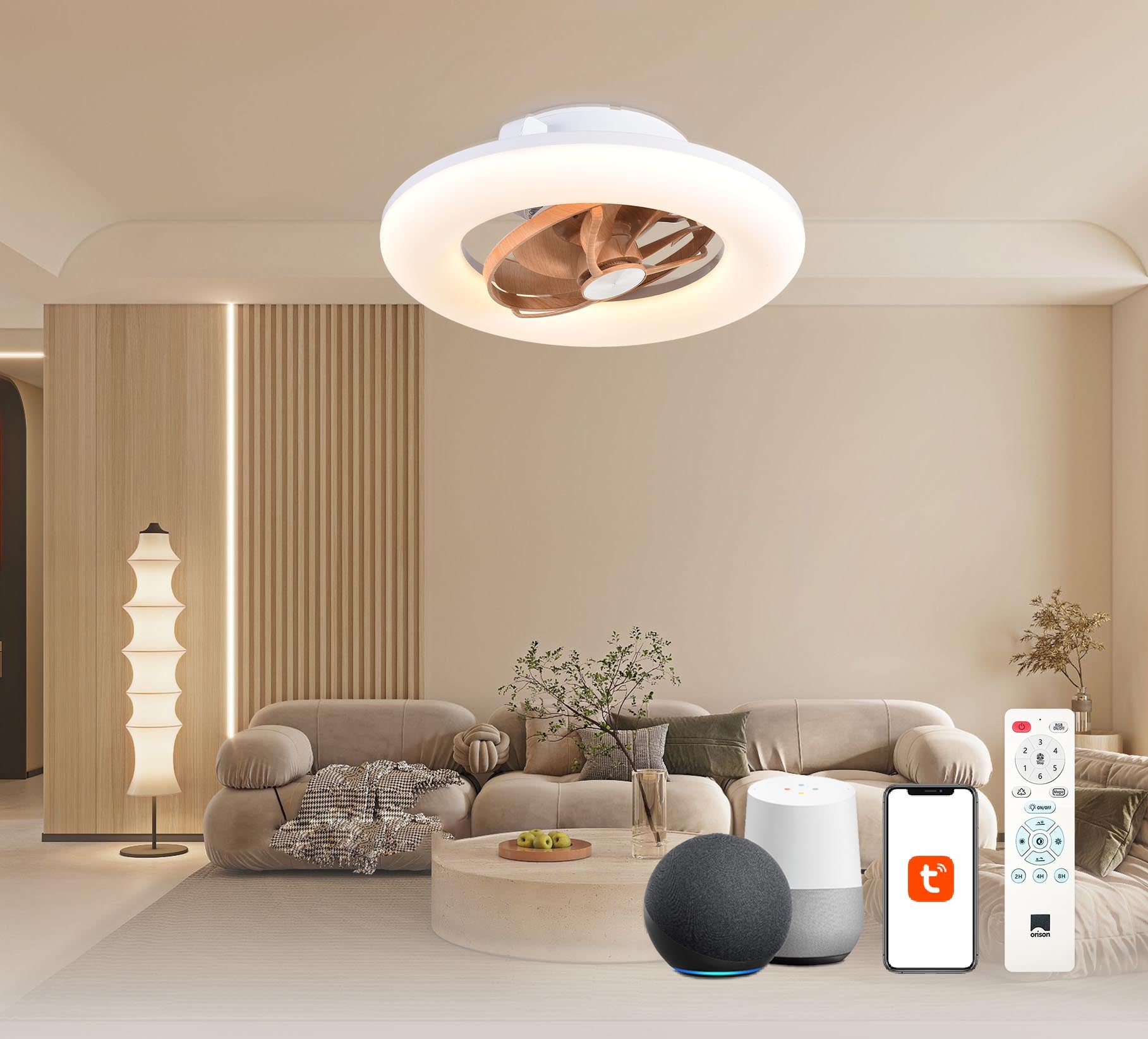
Choosing a ceiling fan today is as much about electronics as it is about form. This piece helps homeowners decide by focusing on comfort, energy, and everyday usability—starting with how blade pitch and motor efficiency translate into practical results for your living room. If you already use voice controls, an alexa ceiling fan can change daily routines: fewer button presses, consistent climate and fewer callbacks for installation issues. I tested one in a modest Stockholm apartment during a cold season retrofit; that real-world experience guides the practical tips below.

What users care about most
Most buyers want three things: steady airflow, low noise, and simple control. Airflow feels like comfort; it is measurable in CFM and influenced heavily by blade pitch. Noise matters because living rooms are multipurpose spaces. Control matters because smart integration—whether via a smart hub or direct Wi‑Fi connectivity—decides if the fan belongs in a modern home or becomes another remote to lose. Prioritise what you notice every day, not the specs you’ll forget after unboxing.
How blade pitch and motor efficiency affect comfort
Blade pitch and motor efficiency are not marketing terms; they are functional. A steeper blade pitch moves more air per revolution, improving perceived cooling without running the motor faster. Motor efficiency dictates power draw for the same airflow: a higher-efficiency motor gives you more CFM per watt. In practice, a DC motor with good PWM speed control will feel smoother at low settings and cost less to run than older AC motors. Look for balanced combinations rather than extremes—a finely pitched blade on a weak motor will still underperform.
Installation realities and common mistakes
Many issues show up at installation: poor mounting, incorrect wiring, or weak Wi‑Fi signal where the fan sits. The mounting bracket must support the fan’s weight and prevent wobble; otherwise vibration spoils performance and increases noise. Wi‑Fi pairing often fails because installers forget to test the app from the seating area—signal strength matters. And lighting integration can introduce compatibility questions with dimmers and smart bulbs—so verify whether the fan’s light circuit uses a dedicated dimmer protocol. —A small oversight here becomes a persistent annoyance.
Smart features to compare
When you compare models, separate core mechanical features from smart features. Mechanical: blade pitch, motor type, balance and CFM. Smart: voice control reliability, integration with your smart hub, scheduling, and remote access. An alexa ceiling fan with light that handles routines and group controls will feel more seamless than one that only supports basic on/off commands. Consider firmware update policy too; good vendors provide updates when security or stability issues arise.
Energy, noise and design trade-offs
Expect trade-offs. Fans optimized purely for low energy may use smaller blades and higher RPM, which can increase noise. Fans designed for quiet operation may rely on larger diameters and refined blade pitch, which has an aesthetic and spatial footprint. Measure the room and note ceiling height—higher ceilings need more CFM and a compatible downrod. These are practical constraints, not abstract choices.
Three golden rules for choosing the right fan
1) Test for real airflow and sound: insist on in-home demos or consult verified CFM and dB data under similar room conditions. 2) Verify control compatibility: confirm Wi‑Fi, Alexa routines and any hub requirements before purchase; mismatched protocols add time and cost. 3) Factor total cost of ownership: include expected energy use, potential firmware support and installation complexity when comparing prices.
When these rules are followed, a well-chosen product becomes a quiet, energy-efficient background system rather than a conspicuous device. In many modern homes that balance simple design with dependable automation, the right vendor—one that documents motor efficiency and supports seamless voice integration—becomes part of the solution, as I found in practical tests. Orison. —