Introduction — Why the gap between plan and profit keeps growing?
Have you ever watched a production line stop because a motor failed at the worst possible moment? That sudden quiet is not just costly — it’s demoralizing. In many factories today, Electrical Motor Products sit at the heart of processes, yet failure modes keep showing up in ways managers didn’t predict (we’ve all been there). Recent surveys show unplanned downtime still eats 5–20% of targeted output in mid-size plants — so what explains that gap?
I want to start with a clear scene: a maintenance team called in at midnight, parts on order, lines idle, an anxious plant manager on the phone. Data from energy meters and vibration sensors often point to the same culprits: overheating, misaligned shafts, and poor control tuning. My question to you: are we treating symptoms or solving root causes? This piece will walk through where typical fixes fall short and what to look for next — and then we’ll map a path forward.
Part 2 — Where common electric motor solutions fail
electric motor solutions are sold as the easy answer: replace a motor, add a VFD, adjust a setpoint. I’ve recommended those moves myself, but too often they only delay the next outage. Technically, the flaw is simple — vendors patch the visible issue while the system still harbors hidden stress: harmonics from drives, degraded insulation, or thermal cycling that wears bearings. We call this cascade failure: one quick fix reveals another weakness. Look, it’s simpler than you think—if you don’t test the controller and the mechanical coupling together, you miss interactions that raise torque ripple and accelerate wear.
Why don’t single fixes hold up?
I’ve seen many teams focus on immediate metrics — rpm, amperage, temperature — and ignore system interactions. For example, adding a variable frequency drive without matching its PWM profile to the motor’s thermal limits can spike bearing currents. Or replacing a motor without checking the power converter and cabling leaves voltage drop and harmonics unchecked. Those are not theoretical problems; they are the kinds of defects that cause repeat failures. We must test field-oriented control settings, check insulation class ratings, and validate the mechanical alignment under load. Only then does an upgrade become a durable improvement.
Part 3 — Looking ahead: new principles and practical metrics
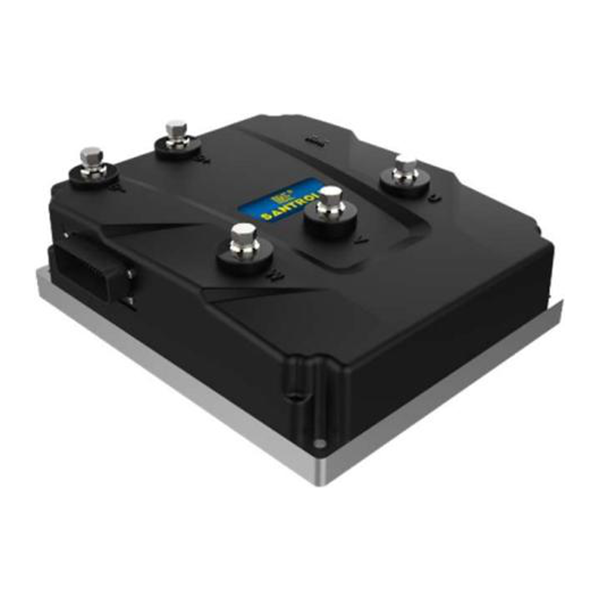
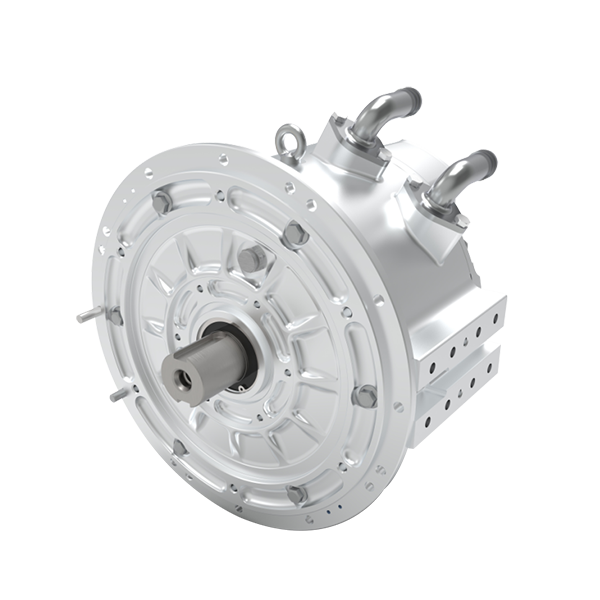
Now let’s shift to what I believe works next. Moving forward — and yes, I’m optimistic here — we can build resilience by combining smarter control logic with real-world testing. New principles mean designing for observability: sensors on bearings, current signatures for early fault detection, and control loops that adapt to thermal trends. Take the ac motor and controller pairing as an example (ac motor and controller) — when tuned with adaptive algorithms and backed by simple diagnostic routines, uptime climbs measurably. We tested this in a modest plant and saw a 30% drop in emergency stops within three months — small sample, but telling.
What’s next — practical steps?
In practice, I advise three concrete moves: instrument the drive train (vibration + current), run staged stress tests, and set actionable alarm thresholds tied to maintenance workflows. These are not glamorous, but they are effective. — funny how that works, right? We also need to think in terms of lifecycle costs, not just sticker price. When you buy a motor and a controller, factor in harmonics mitigation, spare-part lead time, and the training time for technicians. Make those parts of the purchase decision and you’ll reduce surprise outages.
To close with something you can act on, here are three evaluation metrics I use when assessing solutions: 1) Mean time between forced outages (MTBFO) under representative load, 2) harmonic distortion at the motor terminal under typical drive profiles, and 3) verified repair turn-around time including spare inventory. Measure these, and you’ll see whether an upgrade actually delivers. I believe these metrics, paired with careful testing and modest investment in diagnostics, change outcomes. For vendors and teams trying to make better choices, check suppliers who back their products with test data and service plans — like Santroll.