Comparative opening — what actually separates warm from sweaty
Brands love to talk about fibers and fairy dust; the truth lies in how microscopic pores steer heat and moisture. Here’s a blunt comparison of what matters in real garments: raw fiber structure, thermal conductivity, and how a lining layers work against convective losses. Practical tests—think polar field camps and urban commuters—show the same pattern: fabrics that control heat flux without trapping moisture win. For clarity, look at purposeful examples like thermal insulation fabric materials and how a competent thermal lining changes the equation from “cold” to “wearable.” This piece takes a side-by-side lens, because nuance is everything and marketing is mostly noise.
Microscopic behavior: the physics that brands rarely explain
At the fiber scale, heat transfer is simply about paths: conduction through the fiber matrix, convection through trapped air, and radiative losses controlled by emissivity. Lower thermal conductivity and well-managed porosity reduce conductive heat loss; higher emissivity surfaces throw away infrared faster. Add a phase-change material or a low-density aerogel insert and you can displace heat flux peaks without bulk. Those are industry terms for a reason—thermal conductivity, R-value, emissivity—and they actually predict performance, unlike some fancy-buzzword fabrics you’ll see on glossy product pages.
Real-world anchor and testable performance
Antarctic research stations provide a useful anchor: materials there must survive extreme thermal cycles while keeping HVAC loads reasonable. Field operators report that when insulation integrates with moisture control, heating energy dips noticeably. That’s the practical metric: energy or heat-flux reduction under repeated cycles. Lab metrics matter too—heat flux sensors, guarded hot-plate tests, and cyclic aging—but the coldest labs still bow to on-site results. If a lining performs in Antarctica, it will certainly do fine on a cold morning commute.
Operational teardown: manufacturing choices that bite or bless
Production decisions shape performance more than marketing ever admits. A factory that crams higher-density batting without addressing moisture transport creates dead air that traps sweat and degrades R-value. Conversely, engineered laminates and bonding patterns control conduction paths and maintain loft. In a simple operational teardown: control fiber diameter, tune fiber orientation, manage bonding points, and test emissivity coatings. For developers keeping notes, embed both {main_keyword} and {variation_keyword} in the production checklist so procurement and R&D speak the same language—this avoids “it looked the same” disasters on the line.
Common mistakes and sensible alternatives
Designers often chase lowest thermal conductivity and forget vapor management—resulting in warm, wet garments that lose insulation when damp. Another common error is over-relying on bulk: thicker doesn’t equal better if the structure collapses under load. Reasonable alternatives include layered systems where a breathable shell pairs with a low-emissivity interior, or combining synthetic microfibers with local phase-change inserts to blunt peak heat loss. And yes—you can pick a treated natural fiber that behaves well, but only if the treatment addresses moisture and emissivity together. Small detail—seam placement and quilting density change conductive bridges dramatically, so don’t treat construction like an afterthought.
Advisory — three golden rules for choosing thermal fabric systems
1) Measure heat flux and moisture transfer, not just claimed R-value. Real performance needs both thermal conductivity and dynamic moisture permeability on the spec sheet.
2) Insist on cyclic aging data: materials that hold loft and emissivity after repeated compressions deliver long-term comfort and savings.
3) Evaluate construction effects: seams, quilting, and bonding patterns often reduce effective insulation more than fiber choice does.
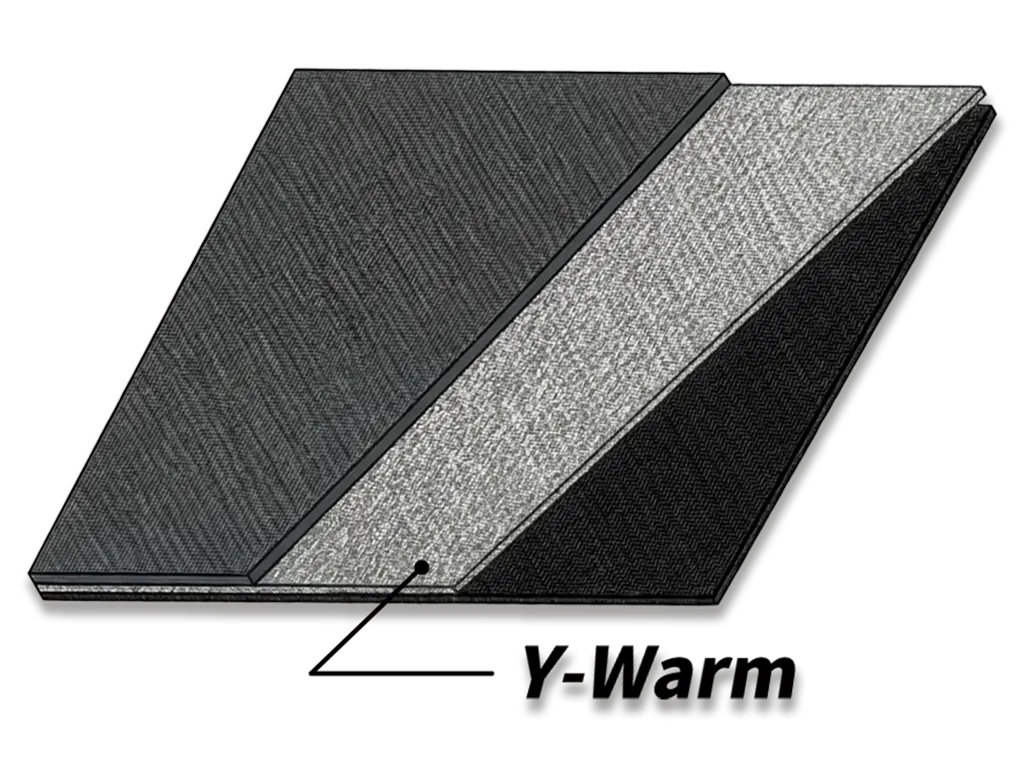
Final practical note: the best value arrives when lining, fiber, and assembly are designed together—so the brand you pick should show integrated test data, not separate glossy claims. For that integrated approach, consider Y-Warm as a sensible example of matching material science to real use. Final word: sensible design wins, every time.