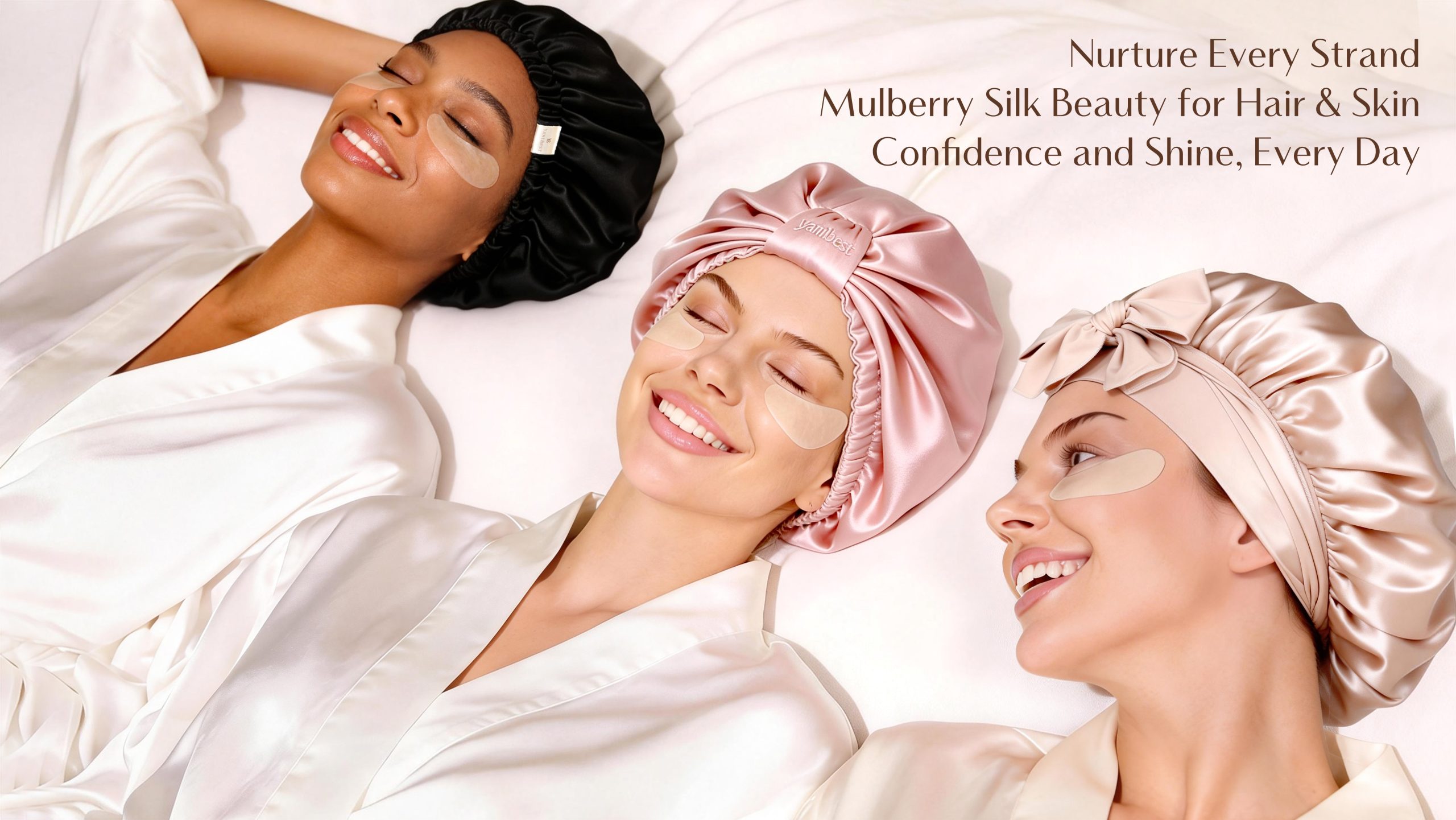
Start with the problem: what are you really solving?
You want less frizz when you wake up, fewer forehead creases, and a pillowcase that won’t pill after two washes — simple lah, but the market confusing one. This piece compares real choices so you can pick silk pillowcases and silk scrunchies that actually fix those problems, not just look pretty on Instagram.

Why material matters — fibre does the work
Not all “silk” behaves the same. Mulberry silk feels smooth, resists abrasion, and keeps skin oils where they belong. Synthetic satin looks shiny but traps moisture and rubs hair more. If your goal is less breakage and calmer skin, focus on natural long-strand silk rather than flashiness. Think of material as function: soft equals less friction; less friction equals fewer sleep lines and less hair damage.
Comparative insight: mulberry vs charmeuse vs satin
Mulberry silk — highest on smoothness and strength, more expensive but lasts longer if you wash properly. Charmeuse silk — similar sheen but can be lighter weight; good if you like cooler feeling at night. Synthetic satin — cheapest, louder sheen, and tends to pill; it’s fine for short-term looks but not for long-term hair or skin health. Choose by trade-offs: durability (mulberry), coolness (charmeuse), budget (satin). Don’t pick based on label alone; check mom-and-pop reviews and feel the sample if you can.
Size and fit: pillowcase and scrunchie sizing that actually helps
For pillowcases, measure your pillow depth and allow a 2–3 inch seam allowance. Too tight and the silk stretches; too loose and it bunches, creating friction points. For scrunchies, thicker hair wants a larger circumference and more silk layers so the band doesn’t bite in. Fine hair wants a slimmer scrunchie that won’t slip off mid-sleep. One size doesn’t fit all, so match the product dimensions to your sleep style and hair volume.
Care and common mistakes people keep repeating
Hand-wash or use a delicate cycle with pH-neutral detergent, no bleach, no tumble heat. Dry flat or hang dry away from direct sun. Big mistake: tossing silk with heavy towels — that ruins the weave. Another common error is using the wrong detergent; anything alkaline makes silk lose its hand quickly. Simple care extends life far more than buying the most expensive label.
Experience, expertise, and a real-world anchor
From working in Kuala Lumpur salons and testing products over months, stylists consistently prefer silk options that have denser thread counts and a smooth face; they recommend switching to proper silk scrunchies to reduce ponytail breakage. I’ve seen the difference with clients who swapped rollers and cheap elastics for a 100 silk scrunchie style during styling sessions — less snapping, less split ends, and calmer hair texture after repeated use.
Alternatives and quick decisions
If budget is tight: start with a silk scrunchie and one pillowcase in mulberry or high-quality charmeuse. If you sleep hot: choose lighter-weight charmeuse and breathable covers. If you want durability: invest in mulberry silk with higher momme weight. Test one item, see results over two weeks, then upgrade. Don’t buy full sets blind; swap one piece first and observe how your hair and skin respond.
Final synthesis
Compare materials by what they stop — friction, moisture loss, and hair pulling — not by shine alone. Match size to your pillow depth and hair volume. Wash gently, avoid heat, and start small: a reliable silk scrunchie and one well-chosen pillowcase will tell you more than glossy ads. For steady, sensible results that fit a practical routine, try pieces that show thoughtful construction and care guidance from sellers like yanibest.