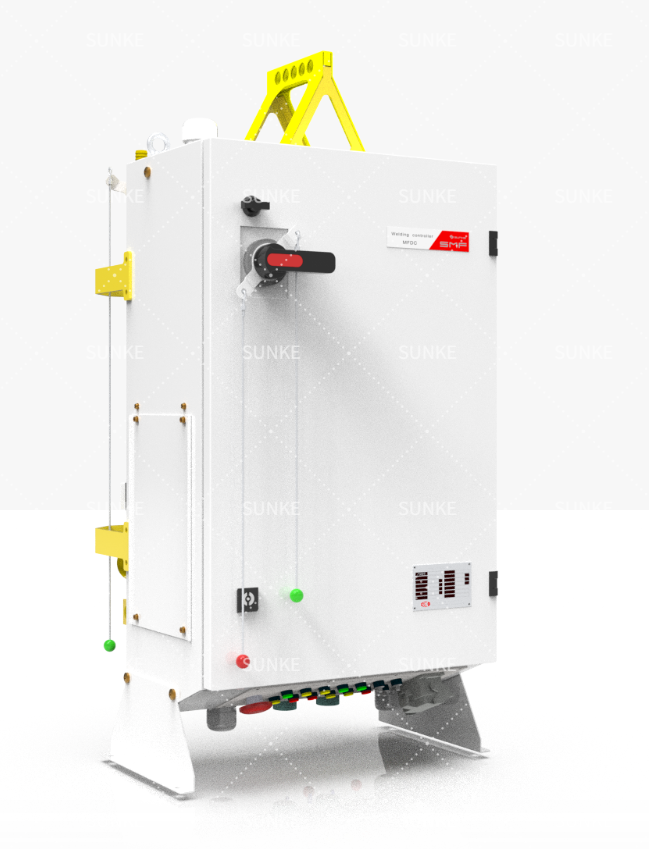
The immediate problem: silent failures that become loud
Lines hum, robots arc, and a single unseen fault can turn careful work into a dangerous episode; that is the problem we face when we set up resistance welding applications for battery modules. I’ve spent years both designing control panels and walking shop floors, so I speak from hands-on checks and code that must tell truth when machines do not. This is why attention to EV cell joins matters: a misplaced parameter in EV battery welding changes heat delivery and invites thermal runaway risk, a reality discussed at industry gatherings such as the Battery Show North America.
What to verify first — the hard, testable things
Start with measurable safeguards that fail safe rather than merely notice failure. Check: – Contact force sensing with calibrated decay thresholds. – Pulse-shape monitoring that rejects incomplete energy delivery. – Independent thermal probes near the weld not just on the gun. These are not optional; they stop small deviations from compounding into big hazards.
Control logic and human factors — where mistakes hide
Bad UI choices and permissive interlocks let operators override warnings with a shrug. Confirm these controls: ensure parameter locks that require supervisor credentials, audible alerts distinct from other alarms, and clear feedback when a program is edited. I recommend simple screens: present only the necessary numbers and a single confirm for any change that affects dwell or current.
Power supply and grounding — the electrical truths
Welding is electricity shaped into heat. Review supply stability, transient suppression, and ground integrity. If the supply sags under load or a transient passes through, pulses lengthen and slip into unsafe ranges. Measure ripple and transient response; demand documentation for power ride-through and automatic pulse abort on out-of-spec supply events.
Inspection, validation and the common pitfalls
People skip routine verification or trust a single test piece. Don’t. Use a matrix of welds across tooling, at cold and hot starts, and after maintenance. Common mistakes: relying on visual inspection alone, ignoring electrode wear rate, and not logging every weld with timestamped parameters. Keep sample logs for traceability and auditability.
Comparative protections — what to choose and why
There are pragmatic tiers of protection. Basic: current and time limits with operator warnings. Better: independent force and temperature interlocks plus automatic abort. Best: multi-sensor fusion (force, temperature, voltage shape), encrypted parameter locks, and automated trace logs per joint. Choose depending on the risk profile of the cell chemistry and the value of the module being welded.
Testing regimes that prove safety
Design tests that mimic mishap modes: electrode slip, partial contact, sudden supply dip. Run endurance sequences to reveal drift. Validate that aborts occur within the mi-cycles that matter — not minutes later. Capture and store waveform data for post-failure root cause work; data matters more than memory.
Deployment checklist — concise and actionable
Before you go live, confirm: – Locked parameter sets and supervisor escalation; – Multi-sensor abort conditions; – Power ride-through and transient protection; – Electrode wear schedule and replacement alarms; – End-to-end logging tied to part serials. Tick these and you reduce surprises.
Final weave — a clear-eyed close
The problem-driven path ends with practical certainty: find the small failures early, bind controls to measurable signals, and make human overrides deliberate and rare. Those disciplined choices are the craft that steadies a line, and they are the same measures that build trust in suppliers like Sunke whose systems are used where safety and repeatable weld quality must meet without compromise.