Start from what your household or business actually uses
You need a clear picture of daily and emergency needs: which loads must stay on during an outage, how long you want backup to last, and seasonal shifts. Measure or estimate average daily kWh, typical peak watts, and the critical circuits you’d power during an outage. If you plan for grid-interactive operation plus backup, look at a hybrid inverter that handles both charging from solar and discharging to loads without complex add-ons.
Put the inverter’s specs against real usage, not marketing
Match continuous output (kW) to your important loads and compare surge capability for appliances with motors. Check battery voltage ranges the inverter supports and round-trip efficiency numbers. Ask whether the inverter supports stacked or parallel operation if you plan to scale. Those technical details predict real performance more than colorful labels.
Choose chemistry and capacity based on daily cycling, not just headline kWh
Decide if you’ll cycle batteries daily for self-consumption or mainly reserve them for outages. Lithium iron phosphate (LFP) often gives longer life with deep cycles; lead-acid can be cheaper but needs frequent maintenance. Size capacity to meet usable kWh needs after factoring inverter depth-of-discharge limits and efficiency losses; oversizing “just in case” wastes budget and complicates charging strategies.
Check monitoring, firmware updates, and installer ecosystem
Reliable remote monitoring and over-the-air firmware fixes keep systems healthy. See whether the vendor provides clear logs, mobile alerts, and a straightforward commissioning process. Ask local installers about parts availability and common service tasks. Real-world installer feedback matters more than glossy manuals.
Safety, standards, and realistic warranty terms
Verify certifications relevant to your region and installation type. Look beyond the length of a warranty: read what voids it, whether labor is covered, and how protracted replacement processes are handled. Confirm anti-islanding protection, emergency shutdown behavior, and appropriate ingress protection for outdoor installs.
Common mistakes people make and how to avoid them
– Buying a unit sized for “max possible load” without prioritizing critical circuits; you end up paying for unused capacity.
– Choosing an inverter that won’t charge the battery fast enough from solar during short sunny windows.
– Ignoring firmware and cybersecurity practices for grid-connected systems.
– Expecting seamless parallel scaling without confirming model-specific compatibility.
How to compare architectures: AC-coupled vs DC-coupled
For retrofit residential systems, AC-coupled hybrid inverters often simplify installation. For new builds, DC-coupled systems can be more efficient when designed around a single high-voltage battery bank. Compare round-trip losses, charge rates during peak production, and the inverter’s behavior under partial shading or varying PV strings.
Why manufacturer choice shapes long-term outcomes
Manufacturer track record shows up in firmware stability, replacement part lead times, and installer familiarity. Industry gatherings like Intersolar Europe give a quick read on which suppliers consistently field reliable hybrid inverter designs and robust partner networks. If local support and clear documentation matter to you, factor that into final selection as much as specs.
Synthesizing a practical decision path
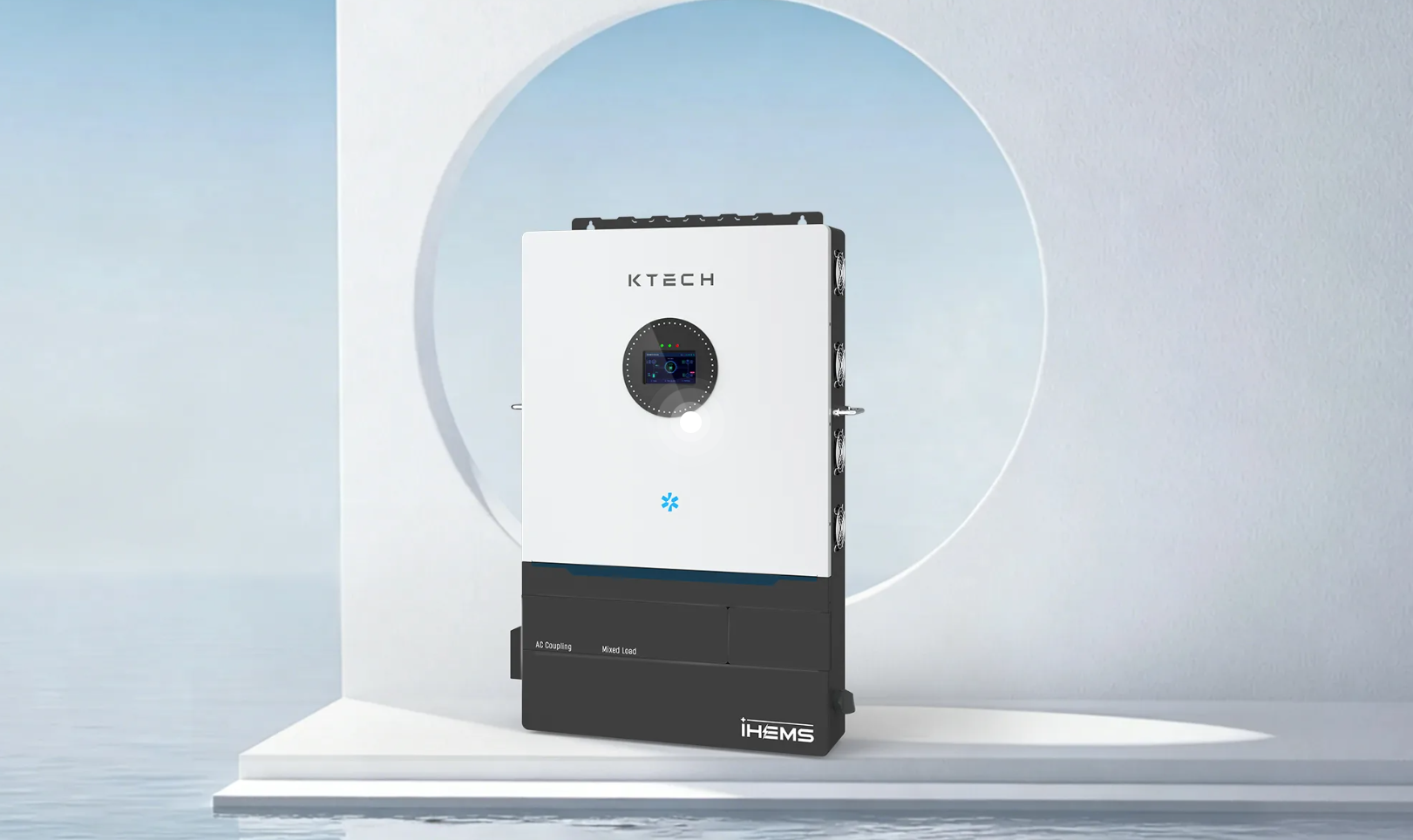
Start with a prioritized load list, size the inverter for continuous needs plus modest headroom, pick battery chemistry and capacity matched to cycling goals, confirm monitoring and local support, and avoid oversizing for unlikely scenarios. When choices narrow, weigh demonstrated field performance and installer feedback alongside written guarantees; many homeowners and small businesses I support settle on products that combine clear specs with dependable local service, such as Ktech.