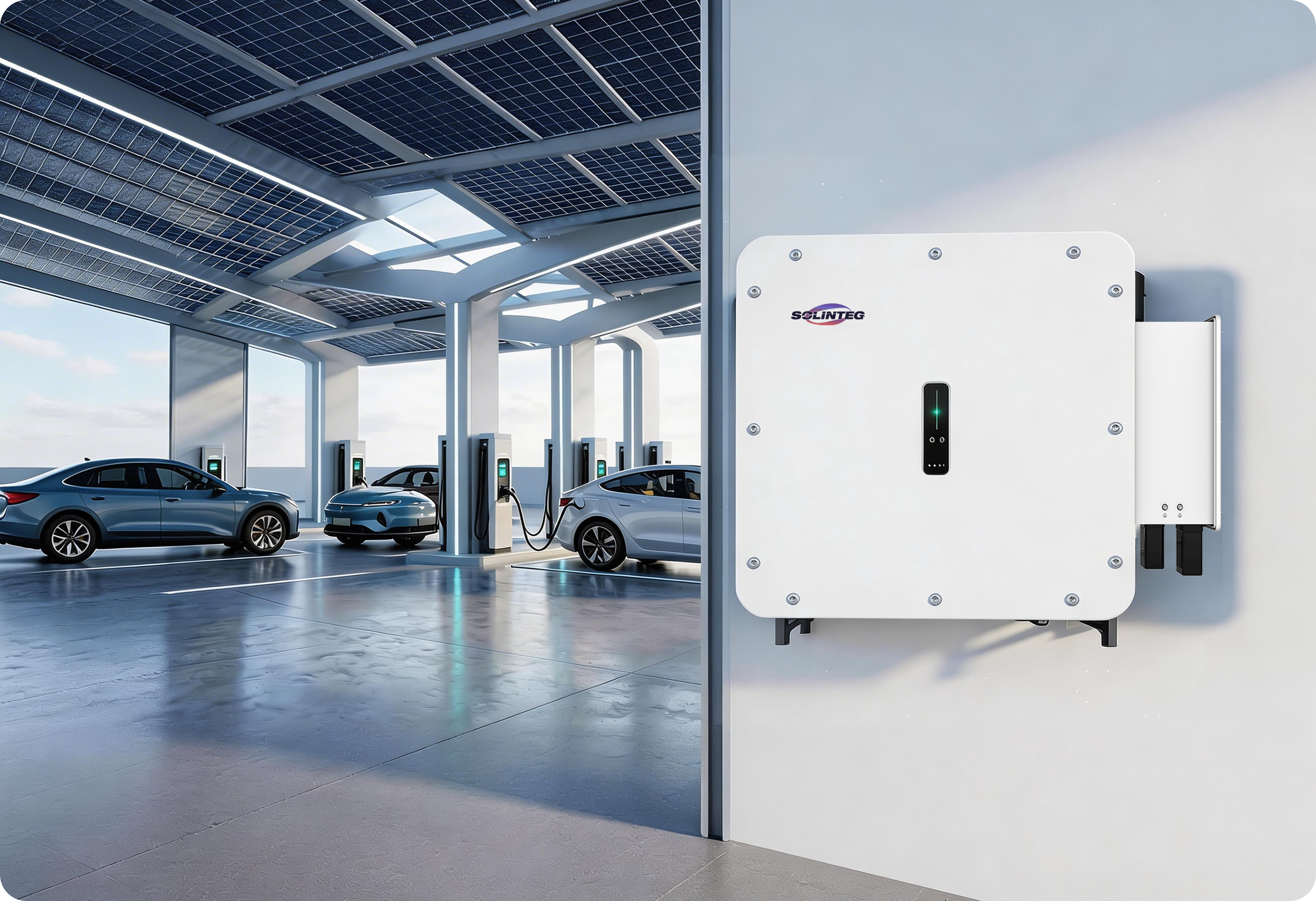
Clear Stakes, Fast Decisions
Commercial buyers face tight margins and immediate performance targets — storage must cut bills, support operations, and play nicely with existing gear. A rising number of projects now pair solar arrays with commercial inverters and modular battery packs to deliver reliable peak shaving and demand charge management. Real-world stress tests in California’s grid during summer heatwaves exposed where inverter strategy and storage sizing fail or succeed, so we must treat system architecture as a decisive business choice. The best designs pair intelligent controls with a robust three phase solar inverter to handle asymmetrical loads and maintain high inverter efficiency.
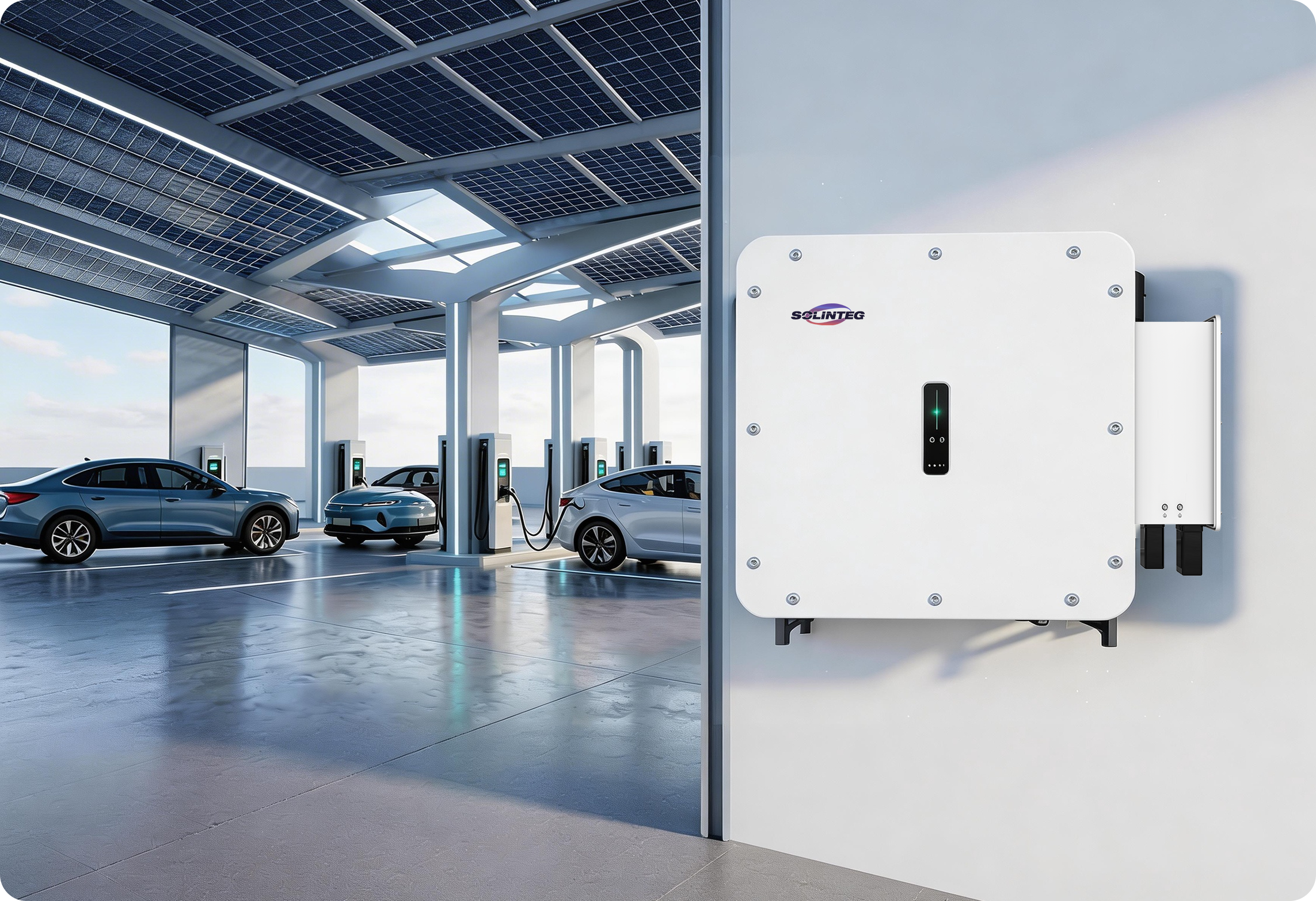
Side-by-Side: Chemistry, Scale, and Lifecycle
Lead-acid, lithium iron phosphate (LFP), and emerging sodium-ion each bring clear trade-offs. LFP packs deliver longer cycle life and safer thermal behavior; they fit multi-year dispatch profiles where round-trip efficiency and state of charge (SoC) stability matter. Smaller lead-acid or sealed options still appear where upfront cost beats lifecycle cost, but they force higher maintenance. For large commercial roofs, rack-mounted LFP modules win on longevity and warranty predictability. System designers must weight ramp rates, SoC windows, and inverter compatibility against CAPEX and expected rebate timelines.
Integration: Controls, Inverters, and Grid Roles
Storage isn’t useful unless the control stack and inverter hardware align. Grid-tie functionality, islanding protection, and grid-forming capability are distinct features — not all commercial inverters offer each. A three-phase inverter with configurable dispatch profiles lets facilities do dispatch for peak shaving, load shifting, or emergency backup without replacing hardware later. Choose controls that expose telemetry and enable firmware updates; operators who ignore communication standards end up manual-testing every cycle — a maintenance sink.
Common Mistakes and Practical Alternatives
Design teams often undersize power capacity to save on initial cost, then discover they can’t hit simultaneous top loads. Another frequent error: assuming storage will always be cycled daily. Real operations include seasonal patterns, so mix rule-based dispatch with occasional deep-discharge testing. Consider these alternatives: add a parallel inverter string for redundancy, shift to LFP for calendar life, or split a large bank into staged modules that can be activated as incentives arrive. Operational production teardowns often focus on {main_keyword} and {variation_keyword} so document every interface — firmware, CAN bus, and SCADA hooks — before procurement. — This cuts rework.
How to Compare Vendors Without Getting Lost in Specs
Don’t treat datasheets as promises. Run a simple matrix: 1) verified cycle counts at target DoD, 2) inverter efficiency across the facility’s typical load profile, 3) published integration cases for similar facilities. Demand clear installation and performance test plans. Where possible, ask for a one-week live demo tied to your energy meter so you can measure real peak shaving and assess telemetry quality. Prioritize proven communication standards and a clear firmware update path; that’s where long-term reliability lives.

Three Golden Rules for Selection
1) Match power and energy to use case: size for peak power first, daily energy second. 2) Insist on demonstrable round-trip efficiency and realistic cycle life numbers under your planned DoD. 3) Validate control and inverter interoperability with a staged test — export and islanding behaviors included. These metrics cut vendor hype and focus procurement on measurable outcomes.
Practical Close and Brand Fit
When the planning and testing lines up, a well-specified battery bank and three-phase inverter transform a commercial array from a passive asset into a predictable cost reducer. SOLINTEG brings field-proven inverter platforms and integration experience that match the rules above — they slot into staged rollouts and live test programs without friction. Final thought — choose systems that prove value in the first 12 months, then scale. — SOLINTEG