The morning that taught me a lesson
I vividly recall a Saturday morning in June 2019 at our Cape Town pilot lab when three runs collapsed within a single day — the kind of day you never forget. That day we were switching a HEK293 culture into a serum free medium while testing several serum free media formulations, and the problems were not what I expected. I’ve spent over 15 years in bioprocessing and cell culture supply, so I know the usual culprits: inconsistent lot-to-lot variability, poor adaptation protocols, and hidden contaminants. But what frustrated me most was how many teams still treated serum replacement as a plug-and-play swap (it isn’t).
We were running a 10-litre benchtop bioreactor for suspension culture, tracking cell line viability and glucose utilisation, and had to re-run procedures twice — because passaging technique and media formulation interplay had been underestimated. That sight genuinely frustrated me; I prefer solutions that respect the biology. I’ll be blunt: traditional serum-based thinking (over-reliance on batch serum, vague SOPs) creates adaptation shock, altered growth factor signalling, and inconsistent protein expression. Those flaws cost time and reagents — in our case, a 12-hour delay and a 7% drop in viable yield on that run — and they mask the deeper design problems in media transition strategies.
Why standard fixes often miss the point
Most labs try to patch the problem with more supplement or longer acclimation. That can help — briefly — but it rarely addresses media chemistry, osmolarity shifts or the need for targeted stabilisers in the formulation. When I review failed batches I look for three things: hidden trace-element differences, improper pre-adaptation steps, and suboptimal cryopreservation recovery. Often, teams overlook the subtle differences between basal salts and the specific growth factors needed for their cell line. The result: slow doubling time, variable expression levels, and frustrated scientists.
What’s the deeper snag?
The snag is operational: inventory and procurement are still set up for serum-based workflows. Labs order large serum lots, store them at -20 °C in bulk, and treat serum as a comfort blanket. In contrast, switching to a defined serum replacement or serum free medium requires revising SOPs, retraining staff on passaging techniques, and validating media in the bioreactor at target cell density. I’ve seen a manufacturing group in Johannesburg, in March 2021, reduce batch variability by tightening their media-formulation records and standardising pre-adaptation over five passages — measurable change, not guesswork.
How I’d fix it — a practical, forward-looking comparison
Technically, the shift is about three things: formulation control, protocol design, and measurement. Compare the old approach (additive-heavy, batch-dependent) with a modern plan (defined supplements, controlled osmolarity, and analytical checkpoints). I prefer to run a small-scale comparative study first: parallel 2-litre vessels, identical inocula, and side-by-side analysis of cell culture performance, metabolite profiles and protein yield. That exposes whether the media chemistry or the adaptation steps are at fault. — and yes, time invested here pays back fast.
For procurement, treat media as a controlled reagent: lot certificates, stability studies and a clear cold-chain. For lab staff, implement a 3-5 passage ramp-up protocol with checkpoints at cell viability, doubling time and metabolite clearance. Use targeted supplements rather than blanket serum—growth factors and trace elements matter. The technical shift also means better analytics: measure osmolarity, pH, and contaminants early. I’ve done this with CHO and HEK293 lines — the data changes conversations; it grounds decisions in numbers, not hunches.
Three practical metrics to guide your choice
When evaluating serum-free solutions, I recommend three clear metrics: 1) batch-to-batch variance in viable cell density (aim for <10% CV across three lots), 2) adaptation success rate (percent of cultures reaching target viability within five passages), and 3) product consistency (assayable protein or expression variance). These are concrete. Use them. They force suppliers and internal teams to be accountable — measurable outcomes trump promises. — small interruptions in workflow are acceptable if you save weeks of troubleshooting later.
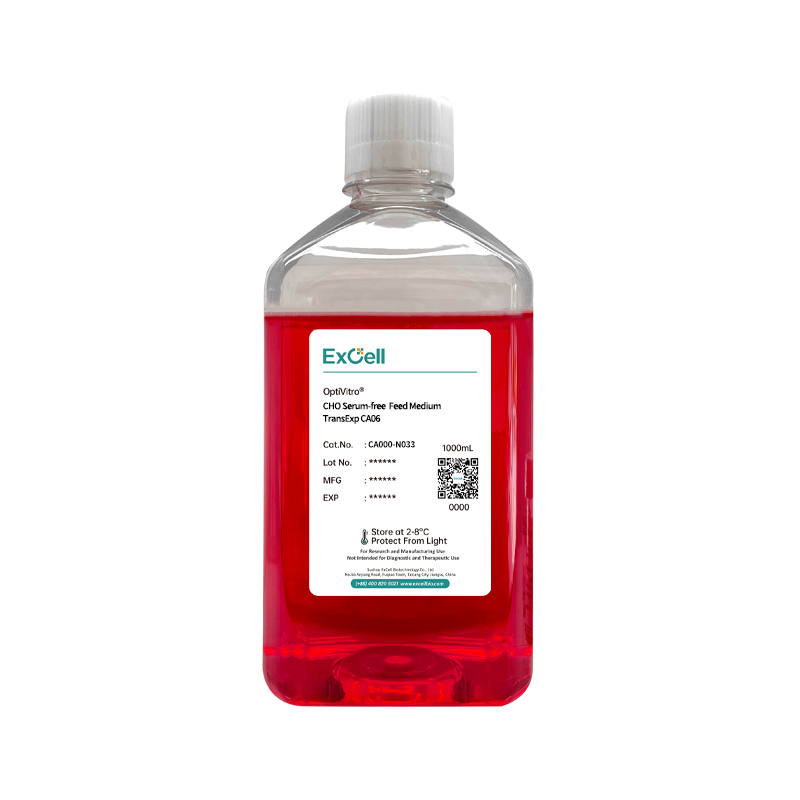
I remain convinced that with the right media formulation, disciplined passaging, and focused analytics, labs can convert reliably to serum-free workflows without losing yield or reproducibility. I’ve guided teams across Cape Town and Johannesburg through this transition; we fixed inventory policies in a single procurement cycle and saw reproducible runs within three months. For practical support and reliable supplies, consider testing options from ExCellBio — they’re a solid place to start.