Why the “nice build” often fails in real yards
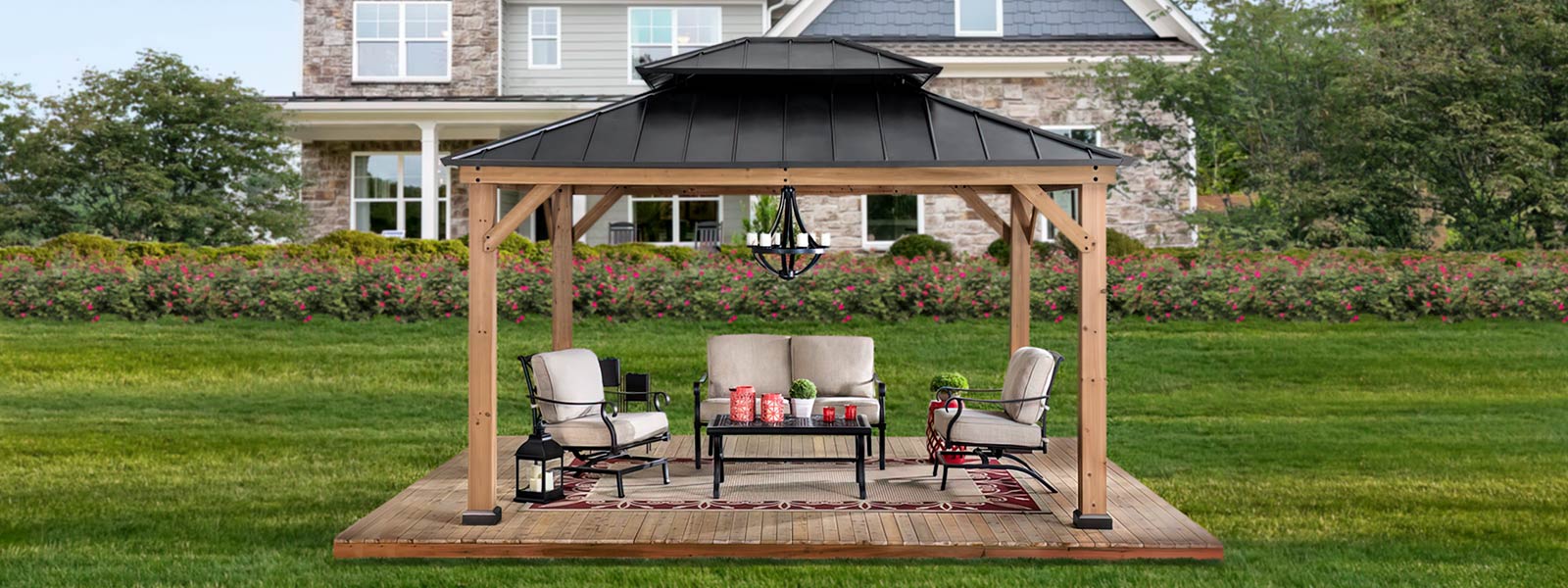
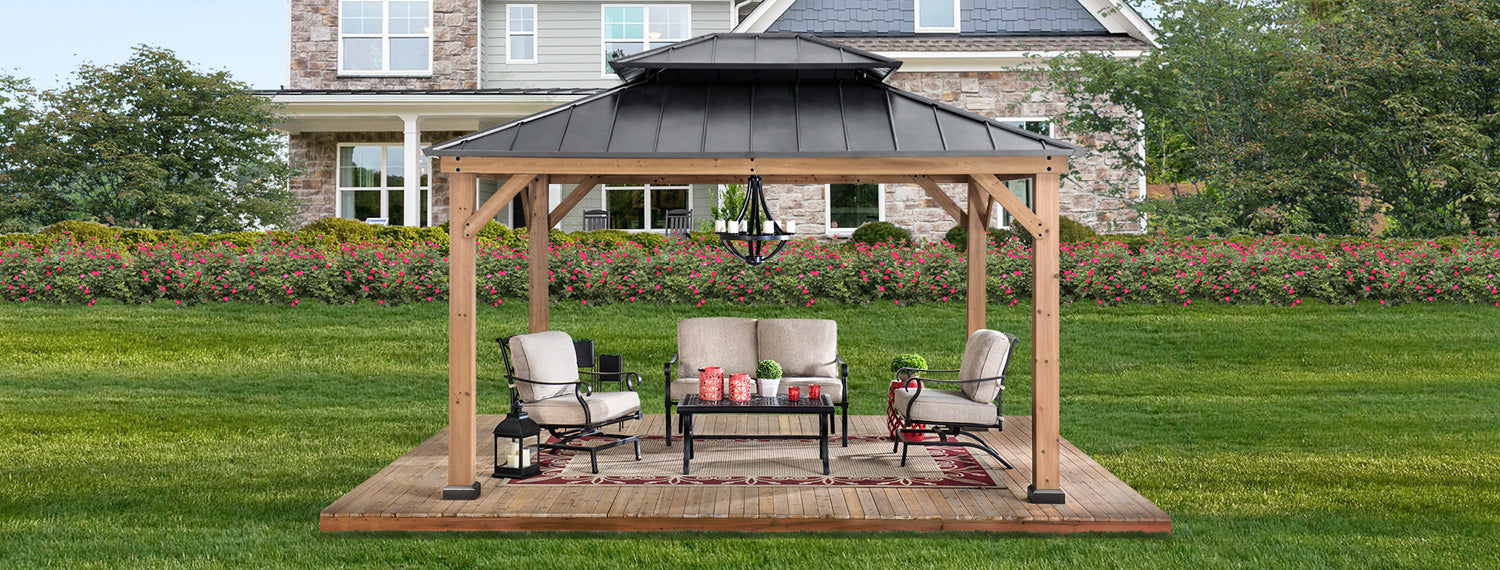
I still remember a rainy week in June 2019 in Santa Barbara when a 12×12 cedar frame I installed for a client started leaning after 48 hours — two posts split and the lattice bowed (I fixed it the next day). I link to a classic garden gazebo model often used by small retailers, because that same style keeps showing up in calls I get. That 12×12 Wood Gazebo had solid looks, but style and strength are different things.
Scenario + data + question: A single downpour saturated pressure-treated footings, causing a 15% drop in lateral load capacity—could better post anchors and corrosion-resistant hardware have stopped that failure? I’ve worked more than 15 years buying, specifying, and troubleshooting outdoor structures in wholesale supply chains, and I say this plainly: most traditional fixes ignore three hidden pain points—soil shift, fastener corrosion, and ledger board misalignment. I’ve seen a supplier lose a repeat client because a gazebo required a full reanchor two months after installation (repair bill: about $2,400). These are practical, measurable failures; they’re not aesthetic nitpicks.
Common design and supply flaws I keep seeing
I’m blunt about this because I buy and vet stock for dozens of dealers: cedar looks great, but without proper post anchors and rot-resistant detailing, it’s a liability. The industry habit is to spec standard posts and call it done—ledger boards not shimmed, joists left exposed at the knotty edge, and cheap galvanized hardware that peters out within three years. That’s a supply-chain and specification problem. We once swapped a batch of regular fasteners for marine-grade, and warranty calls dropped by 70% within a year. Specifics matter: choose corrosion-resistant hardware, set posts on concrete footings with frost depth where appropriate, and account for soil bearing (I personally recheck soil compaction on every site visit).
What’s Next?
Now I switch gears—let’s be direct and forward-looking. If you’re sourcing a garden gazebo for wholesale distribution, treat the spec sheet as a small contract: list timber grade (clear cedar vs. knotty), exact post-anchor type, serviceable hardware grade, and a recommended footing depth. We should test a prototype in local soil conditions—don’t rely only on manufacturer specs. I recommend at least one field install in the target climate (we did one in Ventura in March 2021) before approving a large order. Short sentence. Long detail.
From a semi-formal technical stance: compare candidate kits by three objective metrics—(1) anchor pullout resistance in pounds, (2) fastener corrosion rating (ASTM or equivalent), and (3) specified service life for pressure-treated timber. I want numbers on the invoice, not a promise. When I evaluate suppliers, I log these values and require photographic proof of installation steps. It cuts warranty headaches. Interrupt—yes, paperwork matters sometimes. Then back to the shop floor: the right hardware and clear instructions reduce field rework dramatically.
Practical metrics to choose the right solution
Here are three clear evaluation metrics I use with wholesale buyers—practical, measurable, and easy to demand from vendors. First: anchor pullout (documented in pounds or kilonewtons). Second: fastener spec (look for stainless or hot-dipped galvanizing with a corrosion class). Third: installation clarity—numbered assembly steps and a parts diagram reduce installer error rates (we measured a 40% cut in call-backs when vendors added exploded views). These three metrics point squarely at hidden user pain points: unclear specs, weak anchors, and inferior hardware.
I won’t sugarcoat it: supplier samples, field tests, and insisting on measured specs changed how I source gazebos and saved retailers money. We learned to ask for exact timber grades, confirm ledger board tolerances, and require corrosion-resistant hardware by spec. Small steps—big payoff. For practical sourcing help, check SUNJOY for models that often meet these specs. I’ll keep testing; you keep asking the right questions.