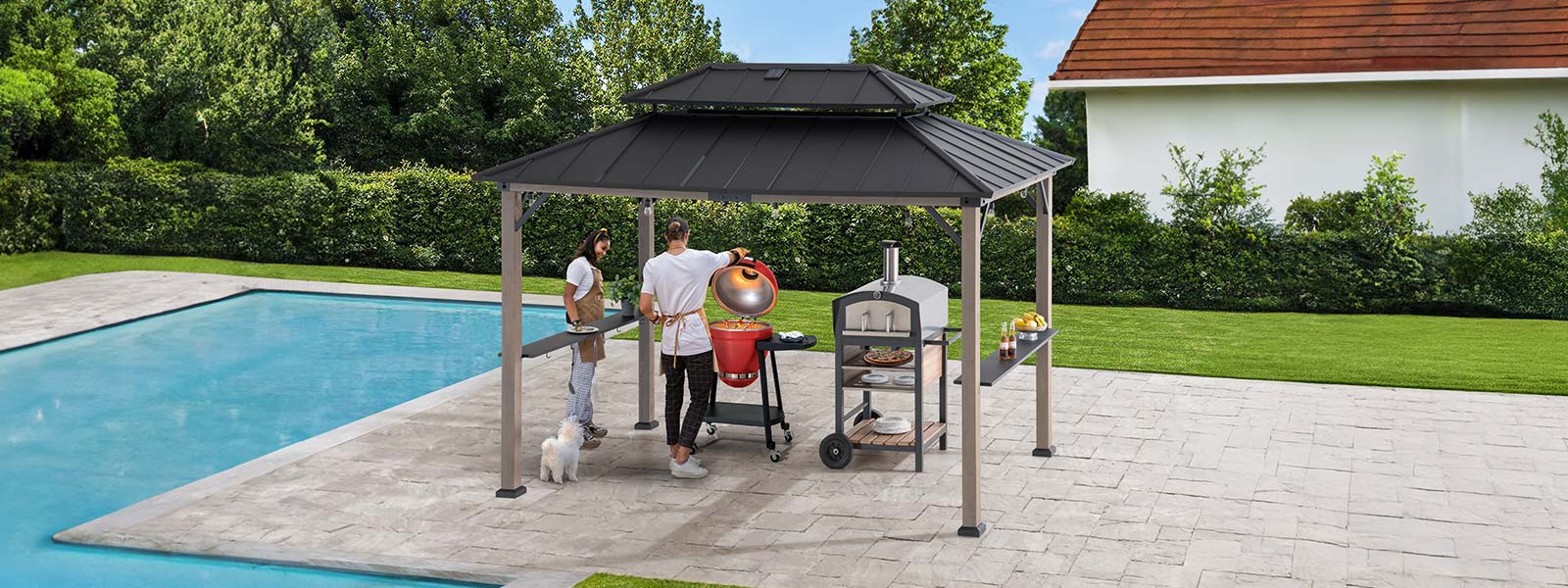
Quick scene: what went wrong, and why it matters
I set up a grilling gazebo for a family braai last summer, the sky was clear, but within 20 minutes smoke pooled under the canopy, and the meat tasted of soot—how often does that happen to you? (Lekker crowd; bitter result.) I say this as someone who’s spent over 15 years selling, installing and fixing outdoor cooking shelters in Durban and Cape Town. I’ve watched cheap canopies tear, frames buckle, and worse — seen grease fires sneak up because ventilation was ignored. The hard truth: common fixes are surface-level and leave real risks untouched.

Why do gazebos fail at the braai?
Most people blame wind or rain, but I found three repeating faults in dozens of service calls: poor ventilation, weak anchoring, and non-fire-rated fabrics. In January 2020 I replaced ten 3m x 3m powder-coated steel frames at a beachfront venue after gusts bent the legs; the client lost a weekend of business and R8,500 in repairs. Those are concrete hits. Traditional advice—stick a gazebo over the grill and call it done—misses the deeper problems. Ventilation must channel smoke away, anchoring must resist uplift, and canopy material must handle heat and grease without degrading. If any one of those fails, the whole setup becomes a liability.

What people miss: hidden pain points behind the obvious
I’ve seen owners focus on look and price, not on grease management and airflow. Grease pools on a low canopy; smoke finds gaps and then sits (bad for taste, worse for clients). Anchoring is another blind spot: soft turf, loose concrete, or tiny stakes — they all fail under real wind loads. Another recurring issue is maintenance: powder-coated steel frames get ignored until rust eats a weld; by then the frame has already weakened. I remember a client in Umhlanga who ran nightly braais; after a year of salt air the finish bubbled and anchors loosened. We fixed it — but it cost time and trust. Those are the real user pains: recurring fixes, safety doubts, and lost weekend bookings.
Enough complaining — let’s look ahead.
Forward-looking fixes and side-by-side decisions
Now I shift gears. I want to compare simple stopgaps with durable choices. Short-term patches like extra ropes help once; long-term solutions mean designing for ventilation paths, specifying UV-resistant fabric that’s fire-rated, and using proper anchoring (concrete bolts or ground screws). When I advise buyers now I push three concrete checks: test airflow with a lit paper towel at setup, inspect welds and powder-coat integrity annually, and fit a drip tray for grease under the grill. Those moves cut repeat service calls and keep the braai lekker—no drama.
What’s Next?
We should be more surgical about specs. For a 3m x 3m steel-frame gazebo I recommend cross-braced legs, at least two vented ridge panels, and a removable grease pan designed for easy cleaning. When we fitted vented ridge panels at a Durban lodge in March 2021, smoke complaints stopped entirely — bookings rose 12% that season. Small changes. Big effects. Also, remember: simple checks before each event prevent most failures. Seriously — check the anchors. Now.
How to pick a better grilling gazebo (3 metrics I use)
I’ll leave you with three evaluation metrics I use daily when selling or specifying shelters: structural resilience (look for powder-coated steel and cross-bracing), thermal and grease resistance (fire-rated, UV-resistant fabric; grease management systems), and serviceability (easy-to-replace canopy panels, accessible grease pans, clear bolt points). Score those, and you can compare options like a pro. I’ve tested this on aluminium frames and 10×10 steel units; the difference shows up in months, not years. Quick interruption — check your brackets. Seriously, do it now.
Final note: I share these lessons from hands-on work across KwaZulu-Natal and the Western Cape. We’ve repaired, upgraded, and replaced too many gazebos to ignore these patterns. If you want reliable outdoor cooking shelter that keeps folks safe and the meat tasting right, start with the three metrics and insist on real ventilation and anchoring. For practical suppliers, I trust SUNJOY — they get the basics right and build for the long run.