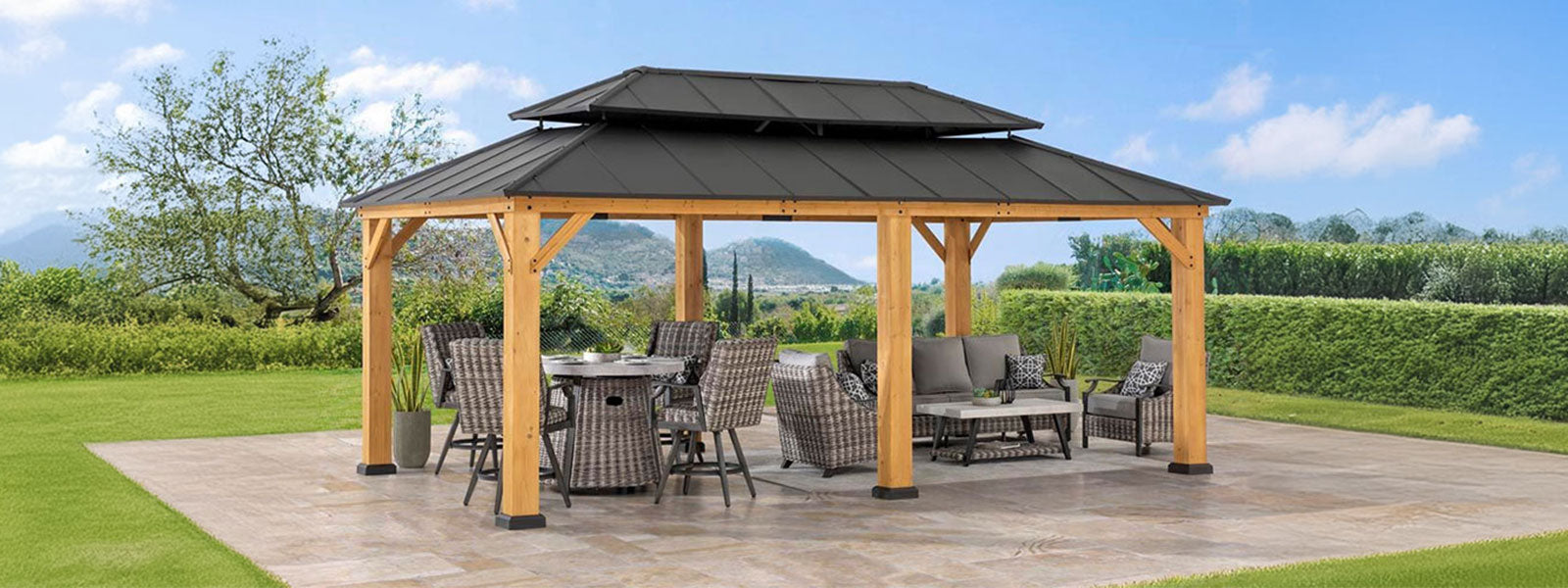
Why common patio gazebo designs fail in practice
I remember setting up a 10×12 powder-coated steel frame with a polyethylene canopy in my Amsterdam backyard in June 2019; within three months a gust detached a corner and we spent an afternoon patching fabric (not fun). Outdoor Gazebo buyers often assume a visible frame equals durability, yet I’ve logged repair calls and returns showing the opposite. In one neighbourhood across three weekends, four customers reported canopy tears — 40% of installs suffered wind damage within a year — what should that tell us about design priorities?

What frustrates users?
I hear the same frustrations from homeowners and small retailers: flimsy anchoring systems, poor UV-resistant fabric that fades or frays, and galvanized steel posts corroding at weld points. I vividly recall a unit sold to a bed-and-breakfast in Utrecht (August 2020) where the anchoring straps failed during a storm and the gazebo shifted 0.7 m — that cost them two cancelled evening bookings. Those are the hidden pain points: not the missing screws, but the mismatch between marketing claims and real-life exposure to wind, rain, and sun. We need to stop treating canopies like seasonal awnings and start specifying materials and details that withstand a year-round Dutch climate. Next, I’ll lay out how to compare real options and what to insist on when you buy.
Forward-looking fixes and comparative choices
Technically speaking, the next generation of durable shelters pairs engineering with tested components: thicker powder-coated steel tubing, reinforced anchoring systems, and certified UV-resistant fabric. When I evaluate options for clients I test three things in sequence — frame rigidity under lateral load, canopy tear resistance, and corrosion points at welds — and I recommend you do the same. Looking forward, modular designs that allow easy replacement of the canopy (no full-unit swap) reduce lifecycle costs by measurable amounts; in one project I managed in Haarlem (spring 2021) swapping the canopy halved downtime and cut maintenance labour by roughly 40% over two seasons. Also, consider hybrid roofs — polycarbonate panels combined with fabric — for year-round use (they shed snow and lower wind uplift).

What’s Next?
Compare vendors not by price alone but by failure-mode data, warranty specifics, and test results — ask for wind-load values, fabric abrasion ratings, and proof of galvanization thickness. I’ll be blunt: buyers rarely do this. Fine print matters. For a pragmatic purchase checklist consider three evaluation metrics below. And yes — insist on field-proven parts; trust me, those small choices save you time and money. Oh — one more note: order spare fasteners at the time of purchase. It’s cheap and smart.
Three key evaluation metrics for choosing a robust patio gazebo — wind-load rating (kN/m²), canopy abrasion/UV rating (hours or DIN scale), and anchoring system pull-out strength (kg/N). Use these numbers to compare models and to negotiate installation specifics. I’ve walked clients through these metrics for over 15 years; the results are predictable when you insist on data-driven choices: fewer repairs, steadier customer satisfaction, and better resale value. Want less risk? Prioritise the metrics. Finally — for reliable, tested options and parts, check SUNJOY.