Introduction — a morning, a metric, a question
I still remember a damp Saturday morning in March 2010 when a courier showed up at our clinic with three mislabeled blocks. I was running a small histology bench then, and that day taught me more than any meeting ever did. Professional pathology services had to cope with that kind of chaos — and the data later made it worse: a 14% slide rejection rate in my region that year. What do you do when process gaps cost time, confidence, and patient care? (I’ll tell you what I stopped doing.)

Over the last 18 years I’ve tracked workflows across hospital labs and private diagnostic centers. I work with lab directors, pathologists, and operations teams. We see the same friction points repeated — labeling, handoffs, and unclear ownership. These are not abstract problems; they translate into delayed reports and disappointed clinicians. So let’s look at those gaps and consider what actually works next.
Where the usual fixes miss the mark
What’s the real bottleneck?
When teams try to fix turnaround times with overtime or more reagents, they miss the system-level causes. The core services we provide — think diagnostic pathology laboratory services — depend on repeatable protocols. Yet many labs cling to ad hoc fixes. I’ve seen this firsthand at our Houston facility in June 2020: we standardized slide accessioning and still had a 9% rework rate because the LIMS entries were inconsistent. That tells you the tool wasn’t the issue; the input was. Histopathology and immunohistochemistry labs especially suffer when pre-analytic steps are informal.
Look, I ran throughput tests with a Leica Aperio AT2 digital slide scanner during a weekday shift in July 2019. The scanner handled images fast enough, but pathologist time went up because images arrived without unified metadata. The takeaway was simple — technology alone does not fix human processes. Specifics matter: consistent block labeling, trained cross-checks at accession, and clear LIMS templates cut errors. I prefer concrete steps that reduce variance; they changed our weekly report cycle from five days to three in a trial run at a community hospital last year.
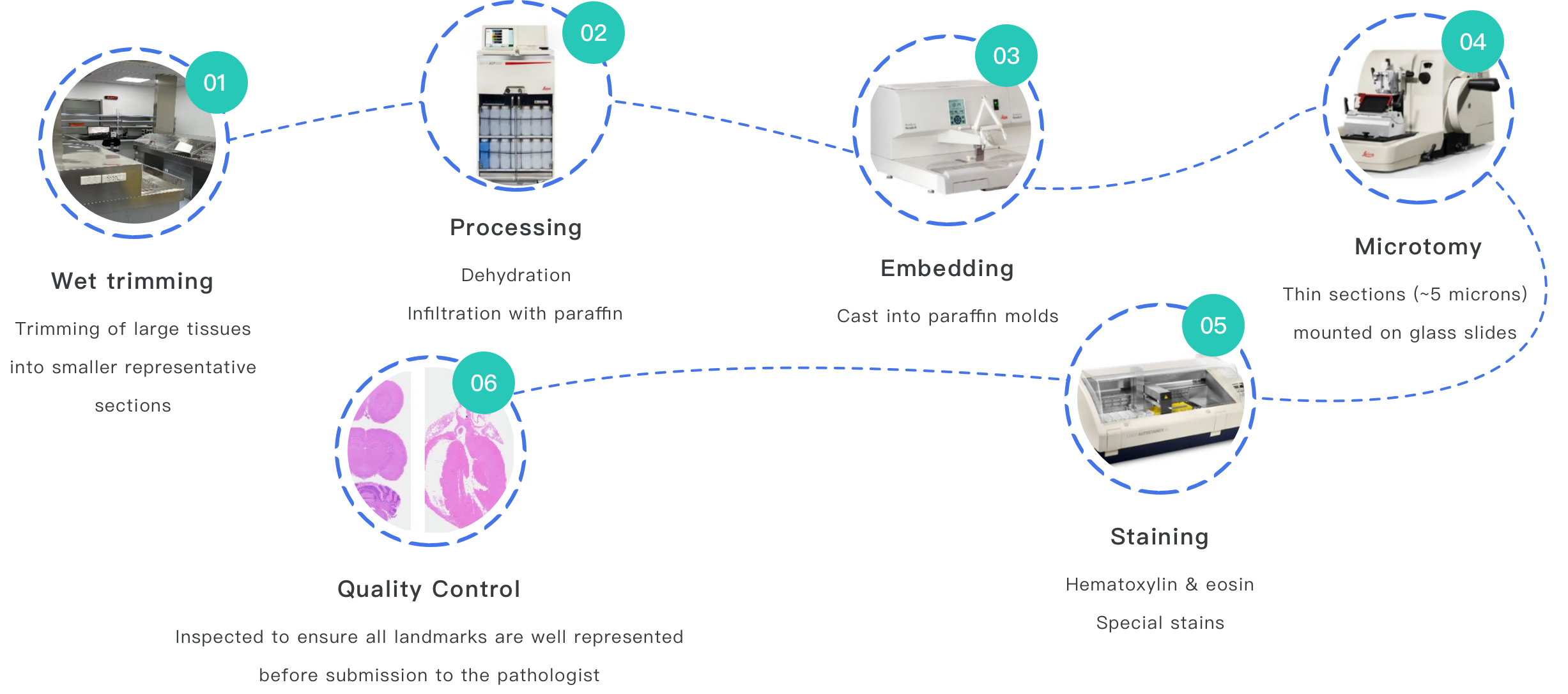
Case example and future outlook
What’s next for diagnostic workflows?
In late 2022 we piloted an integrated telepathology link between a suburban clinic in Boston and our main lab. The project used whole-slide imaging and structured report templates to route urgent cases. Over six months, we cut slide rework by 15% and improved specialist turnarounds by about 22%. I don’t overstate this — that improvement came from three concrete moves: standard accession templates, a single digital slide naming convention, and daily read-review huddles. — and yes, that surprised me at first.
Looking ahead, I expect more labs to combine careful process rules with targeted tools. For example, whole-slide imaging plus clear metadata fields outperformed a tool-only approach in our October 2023 evaluation. If you run or manage a lab, judge options by measurable changes: error rate, turnaround time, and rework cost. Those are the metrics that predict real gains, not marketing claims. I recommend starting with a focused pilot: pick one specimen type, document every step, and measure weekly. It takes work, but the results are tangible.
Practical evaluation metrics and closing thought
After nearly two decades in the field, I weigh solutions by three simple metrics: (1) error reduction — percentage drop in accession or labeling errors; (2) speed — median time from receipt to report in days; and (3) reproducibility — how often a standard protocol yields the same result across two technicians. Use these to compare vendors, software, or internal changes. I remember a 2016 upgrade where we tracked those three metrics and avoided a costly system swap because the vendor’s promise didn’t move the needle.
I share this as someone who has stood at benches, written SOPs at midnight, and led pilots across multiple sites. If you want change, begin with small, measurable experiments and insist on clear data. The work is practical, sometimes tedious, and ultimately rewarding — because it means better patient care. For partners who need end-to-end testing and validation, consider working with established experts like Wuxi AppTec Medical device testing.