Introduction: Why the small controller matters
Have you ever paused at a factory gate and wondered why a simple box can make or break a production line? (I have—many times.) Recent industry surveys show that nearly 40% of unexpected downtime traces back to poor drive behaviour, and that statistic alone is enough to make any engineer sit up. In my experience, a motor controller is not merely an accessory; it is the decision-maker for speed, safety and efficiency. I’ll share what I’ve learned from hands-on troubleshooting and design reviews, and I’ll point out practical trade-offs you may not have been told about.
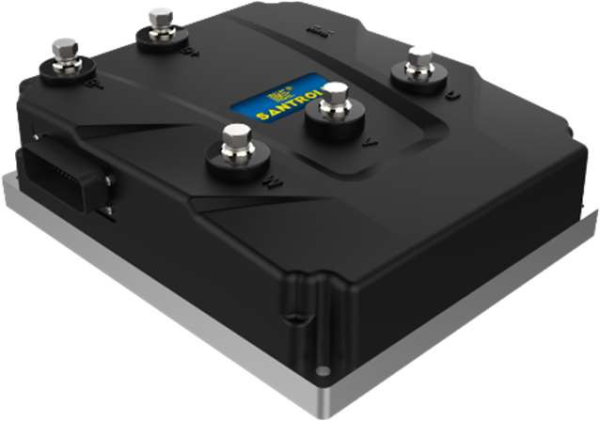
The scenario is familiar: an integrator fits a generic drive, the motor hums but performance is lacklustre, and the plant manager asks why throughput hasn’t improved. What follows is often a patchwork of firmware tweaks, capacitor swaps and hurried PID tuning. Data from field audits show that addressing control logic and thermal management can recover 5–15% energy savings on the same hardware. So, what really separates competent controllers from the risky ones on the shop floor?
In the pages that follow I look closely at where controllers falter, how hidden user pain points manifest, and where practical improvements can be found. I’ll keep the language plain, use a few industry terms (for clarity), and offer straightforward criteria you can use at the next procurement meeting. Now, let us examine the traditional flaws—so you can spot them early and act decisively.
Traditional Flaws and Hidden User Pain Points
I begin this section with the core device I’ve worked with most: the bldc motor controller. In deployments I’ve audited, three recurring technical issues crop up: unstable torque under variable loads, noisy feedback from imperfect sensors, and inefficient switching that cooks power converters. Let me be candid—these are not hypothetical. I’ve stood beside machines where a controller’s poor PWM strategy caused visible torque ripple and repeated downtime. Look, it’s simpler than you think: small design choices ripple into large operational costs.
Why do controllers still cause grief?
First, many legacy controllers rely on coarse sampling and naive filtering. That shows up as laggy speed loops and hunty control (oscillation). Second, designers often under-spec thermal margins in the inverter stage; heat shortens lifetime and increases failure rates. Third, user interfaces are built for technicians, not operators—so configuration errors are common. From my vantage point, these are design and human-factors failures, not just component faults.
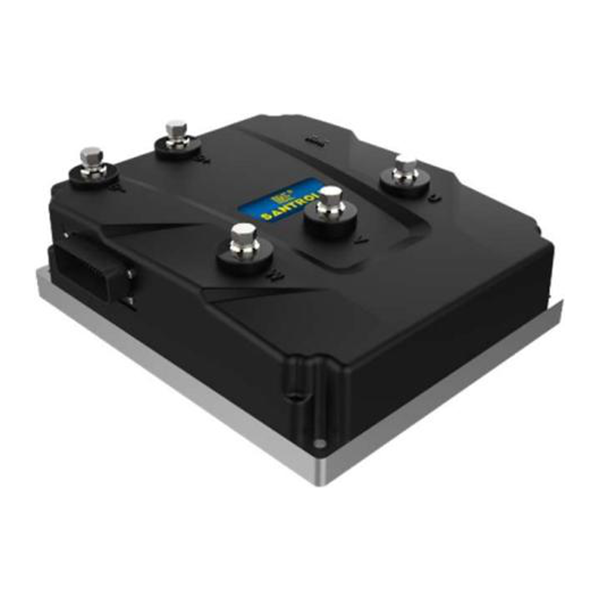
Technically speaking, issues such as hall sensor jitter, insufficient field-oriented control tuning, and poor EMC practice are the culprits. I’ve fixed motors by reworking the control algorithm, adjusting current limits and adding simple shaft grounding—small fixes with outsized effects. — funny how that works, right? If you care about uptime, look beyond nameplates; ask about sampling rates, switching frequency, and thermal derating. Those questions matter far more than brand logos.
Future Outlook: New Principles and Practical Choices
What’s next for motor control? I favour principled changes: move to deterministic control loops, adopt adaptive algorithms, and design for maintainability. In plain terms—make the controller smart enough to notice its own errors and simple enough for technicians to reset without a PhD. In new designs I’m seeing wider use of sensor fusion (combining encoder and observer estimates), smarter current limiting, and modular power stages that ease field swaps. These are new technology principles, and they change how we spec drives.
What’s Next — practical steps?
Adopting motor control solutions that expose clear diagnostics is the most practical step. I recommend these three evaluation metrics when choosing a solution: 1) Diagnostics depth — can it log faults and present root-cause hints? 2) Control fidelity — does the drive support advanced modes like field-oriented control and configurable PWM frequency? 3) Serviceability — are modules and firmware updates straightforward in the field? These are not abstract—they are the difference between a quick onsite fix and a multi-day outage. — and yes, I speak from projects where a single diagnostic flag saved weeks of downtime.
To sum up, focus on the controller’s ability to detect, adapt and be repaired. That will deliver measurable improvements in efficiency and reliability. If you need a practical starting point, review drives against those three metrics during trials, and involve both operators and maintenance teams in the evaluation. For suppliers that combine transparent diagnostics with sensible hardware design, I keep an eye on offerings from manufacturers like Santroll—they show promising alignment with the practical needs I’ve described.