Introduction
Here is the truth. Most failures at grid-scale are not dramatic. They are small, repeated misses that bleed cash. In utility scale battery storage, those misses look like a 1% control drift that becomes a 5% revenue gap by Q3. I saw it on a hot Friday in August 2024 in Pecos County, Texas—110 MW installed, still losing $120,000 a month to avoidable downtime. When I sit with buyers and point them to utility scale battery storage companies, the first question I ask is simple: can the system dispatch the same at 18:00 as it did at 06:00? Data tells you fast. A 92–94% round-trip efficiency on paper is worthless if your HVAC set points and PCS logic fight each other. (I have watched that tug-of-war on a SCADA screen.) So, the scenario is clear; the numbers are real—what is the weak link in your stack?
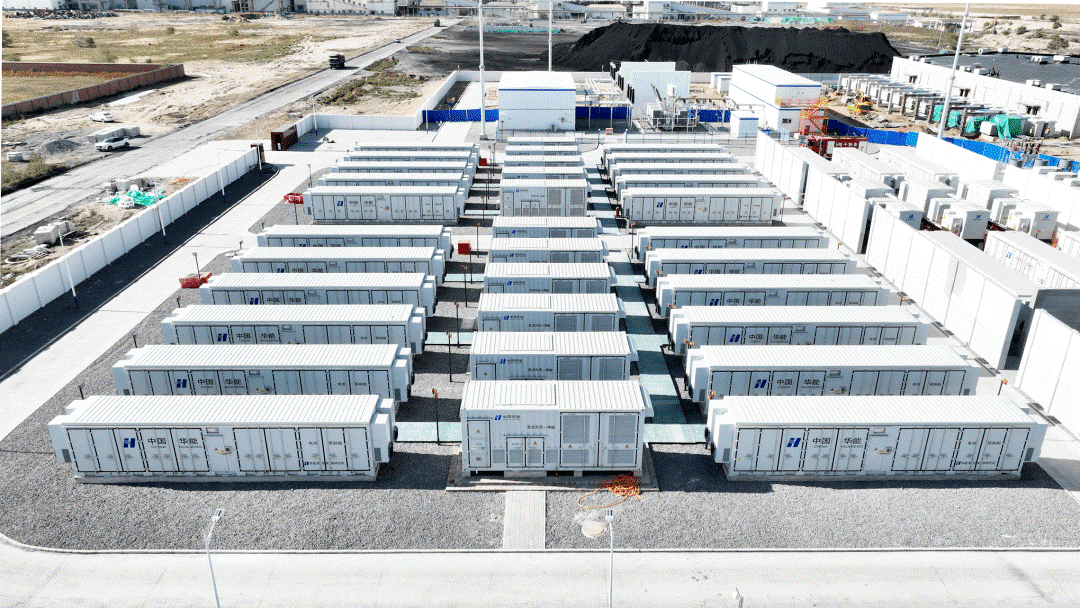
I keep my tone direct because delays cost money. If your BMS and energy management system do not align, you pay in cycle life and missed price spikes. Does that sound harsh? Good. It should. Let’s break open where the cracks start—and how to compare vendors without the hopeful fog.
Hidden Breakpoints in Procurement and Design
Where do standard setups fail?
When teams shortlist utility scale battery storage companies, they often over-index on $/kWh and warranty years. That looks disciplined. It is not. I have watched a 200 MWh site in Kern County, California (commissioned in March 2023) lose 3.2% usable capacity in six months because the augmentation plan assumed a 0.5C profile, while trading drove 0.9C during peak spreads. The spec sheets did not lie—the operating reality did. Your BMS, power converters (PCS), and EMS must agree on limits. If one says “go” while the other throttles, heat rises and your state of health drops. Let me be blunt—this bit trips teams up.
Another trap: controls transparency. Buyers accept black-box firmware with no change log. Then they learn, mid-summer, that a minor patch altered SOC windows by 2%. That costs frequency response revenue—daily. I prefer vendors that publish firmware trees, allow edge computing nodes for site logic, and document grid-forming inverter modes. If you cannot audit how curtailment logic kicks in during a feeder event, you cannot price risk. That sight genuinely frustrated me on a December 2022 retrofit in Queensland, where a hidden limiter cut discharge at 85% SOC. We fixed it in 11 days, but the damage—lost confidence—lingered.
Forward-Looking Comparisons: Control Stacks, Bankability, and Real Uptime
What’s Next
Looking ahead to 2026, I put new weight on control architecture and degradation discipline—not just cell chemistry. The strongest utility scale battery storage companies now design “tight loops”: site EMS tied to inverter controls with clear handshakes, temperature bands enforced per rack, and event-driven dispatch that respects C-rate ceilings. The principle is simple but strict. Keep heat flat; keep impedance drift slow; schedule augmentation with measured SoH, not guesses. Grid-forming inverters are no longer “nice to have” for weak feeders. They are stability tools that cut nuisance trips, especially on windy feeders in West Texas or the Eyre Peninsula. I have seen trip counts drop by half after a switch to grid-forming mode—and you feel it in the P&L.
A short case to anchor this: a 75 MW/300 MWh site outside Augsburg, Bavaria, upgraded its control stack in May 2025. They moved to a layered EMS with local failover, a publish–subscribe data model, and an open SCADA tag map. Measured outcomes over 90 days: round-trip efficiency improved from 91.6% to 93.1%; forced outages fell from 4.7 hours/month to 1.9; HVAC energy dropped 11% after better rack-level set points. Nothing flashy—just aligned logic. That is the direction of travel. Vendors that expose tuning parameters and share degradation curves by calendar vs. cycle stress will win bank credit committees faster. And when curtailment rules change—as they will—transparent control makes the pivot bearable, not brutal.
Practical Filters I Use Before Signing
After seventeen years doing this work, I rely on three checks. First, control traceability: I want versioned firmware, a readable event log, and a clear path to roll back. Second, thermal discipline in the design: rack-level sensors, stable temperature deltas under 3°C across the room, and a PCS profile that will not push cells outside safe bands during 10-minute ramps. Third, bankability with teeth: spares strategy documented on a calendar, onshore inventory within 48 hours transit for critical boards, and performance guarantees that tie to real dispatch, not lab tests. If a vendor flinches when you ask for a post-commissioning test window—walk. You will pay for that silence later.
Let me close with a simple stance born of field hours, not slides. Choose the team that shows you their edge cases, not just their glossy peak numbers. Ask them how they recover from a feeder reclose while mid-cycle. Ask them if their SOC estimator drifts after 72 hours idle. If they answer fast—and with logs—you are close. If they stall, you are warned. For reference and further study, I keep an eye on HiTHIUM.