Introduction
Picture this: the sky splits with rain, the headliner is five minutes out, and the tech line hums like a hive. Festival laser lights cut through the mist, bright and stubborn, as the crowd swells and the countdown burns down. Last season, one major tour logged more than 30% of lighting hiccups to water ingress and voltage swings—tiny flaws that snowball into big blackouts. So here’s the real question: how do professionals keep the beam steady, the timing tight, and the magic intact when the weather and the grid feel like villains? (Because live shows always find the weak link.) We’ll pull the curtain on the hard parts—what breaks, what holds, and what smart crews do before the first drop lands—so you can weigh gear and decisions like a pro, not a gambler. Let’s move from the noise to the signal and get precise.
Hidden Pitfalls Behind the Glow
What really fails after midnight?
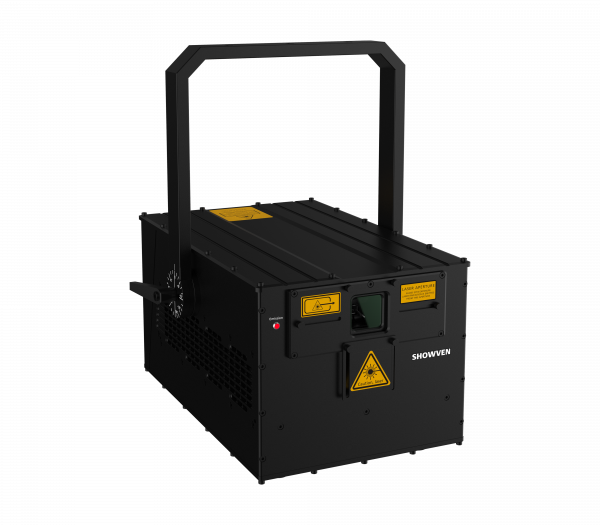
To solve the messy parts, you need to start with the right frame: a waterproof laser light projector is not a luxury; it’s the baseline. Look, it’s simpler than you think: bad shows often come from small mismatches—IP rating that assumes drizzle, not wind-driven rain; fans that pull moist air across optics; power converters sized for peak draw, but not spikes when subs hit. The best builds isolate the optical path, protect galvo scanners from micro-condensation, and keep beam divergence stable as the housing warms. You also want clean control lanes. DMX/Art-Net is fine, but watch for ground loops and latency hops when nodes go from rehearsal to live load—go figure.
Users feel the pain in quiet ways: the first five minutes look amazing, then scan lines wobble as heat sinks saturate and firmware throttles. You may see color shift when diode temps drift, or audible whine as PWM drivers chase unstable power. Safety interlock triggers from phantom faults, and suddenly your hero cue is dark. These aren’t operator mistakes; they’re system gaps. Weather pushes past seals, optics haze, and alignment drifts by hair-widths that the audience reads as “meh.” The fix lives in tight tolerances, not bravado: IP65 sealing that stays IP65 after transport, thermal paths that clear heat without pulling damp air, and control clocks that keep sync even when a switch burps. That’s the quiet math of reliability.
Comparative Insight: Today’s Limits vs. Tomorrow’s Leap
What’s Next
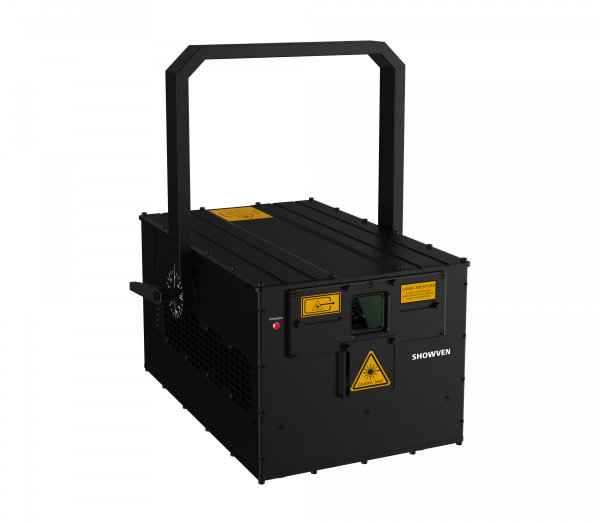
Here’s the forward edge. New platforms treat outdoor shows like a hostile lab. Instead of passive sealing alone, they use active purge channels, hydrophobic coatings on lenses, and self-test routines that map galvanometer drift before doors open. Think adaptive thermal management that balances heat without inviting moisture, and edge diagnostics that flag rising current draw before it becomes smoke. In that lane, waterproof outdoor decorative laser lights aren’t just “weatherproof”; they’re predictable under stress. Semi-formal note, but important: beam integrity is the currency. If divergence creeps, your skyline goes from scalpel to flashlight. If scan speed drops from 30kpps to the low 20s under heat, animations smear. Small numbers, big story.
Real-world impact shows up in the timeline. A coastal festival ran sunset-to-storm-to-sunrise across three days. Old rigs needed constant wipes, recal, and fan swaps. The newer sealed designs ran self-checks at sunrise, logged a few minor alerts, and never missed a cue—funny how that works, right? The difference wasn’t hype; it was design: sealed optics, stable power paths with surge headroom, and clock-stable control that shrugged off network noise. We’ve moved from “hope it holds” to “prove it holds.” In short, we learned that crowds judge with their eyes, but systems fail at their edges. Tame the edges, and the show feels effortless—even when it isn’t.
Advisory close—three metrics that matter when you choose: 1) Environmental hardening: look for true IP65/67 after transport, plus thermal design that keeps diodes in spec without moisture ingestion; 2) Optical performance: verify beam divergence under load (<1.2 mrad target is solid) and scan stability at rated speed; 3) Control and power integrity: clean DMX/Art-Net timing, safety interlock behavior under fault, and at least 20% power headroom in converters for musical peaks. Nail these, and you’ll spend show time creating, not firefighting, with a steady hand from start to encore. For deeper specs and design thinking from the field, see Showven Laser.